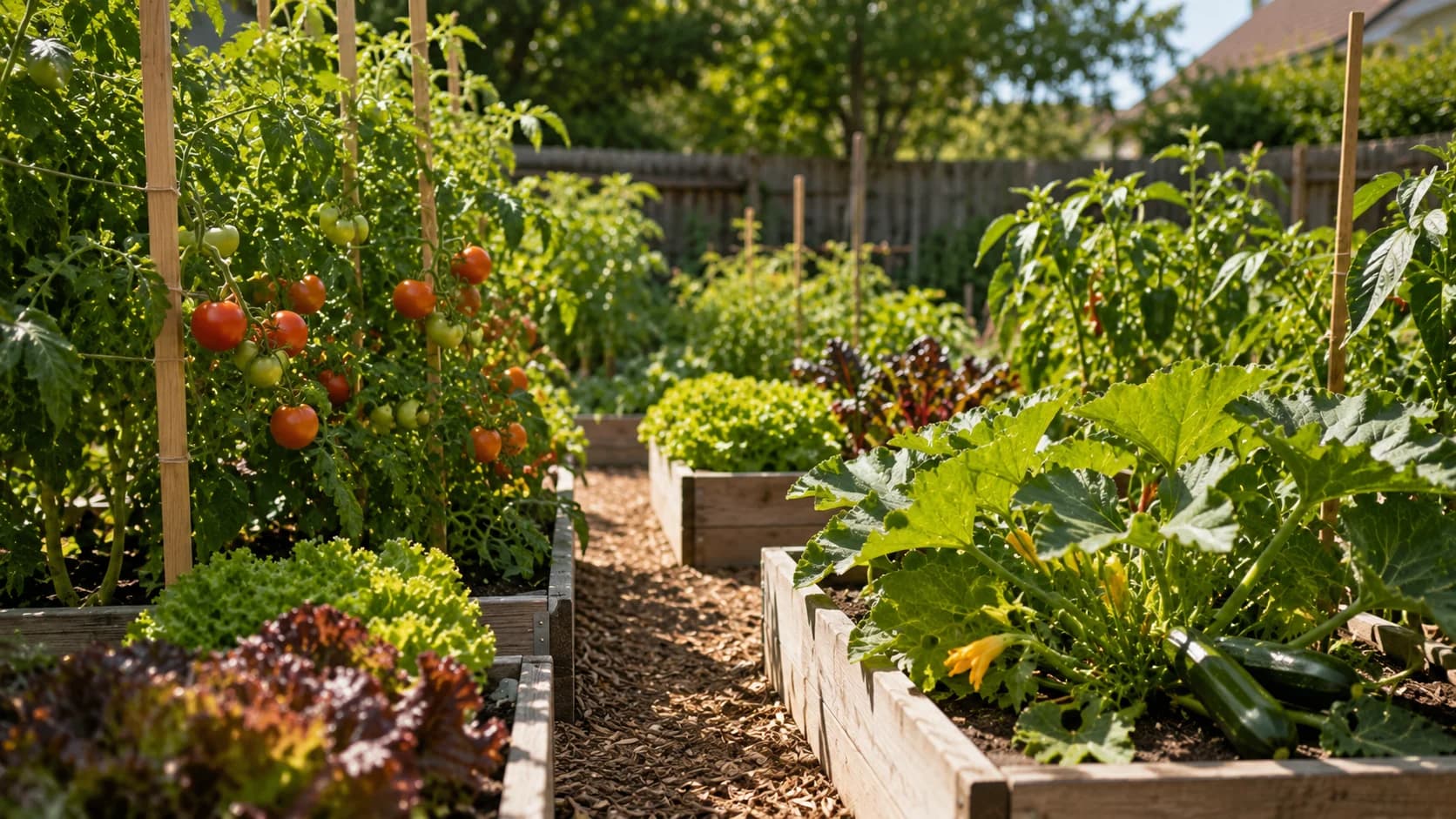
10 No-Fail Vegetables for Your First Summer Garden
The hardest part of a first garden isn't the physical work — it's the uncertainty. Did I plant at the right time? Is my soil good enough? Why isn't anything happening yet? Most beginning gardeners either start with crops that are genuinely demanding (fussy heirloom varieties, finicky root vegetables in poor soil, cool-season plants during a heat wave), or they plant the right crops at the wrong time.
This list fixes that. Every vegetable here is forgiving by nature: tolerates mediocre soil, recovers from occasional missed waterings, germinates reliably, and produces quickly enough that you'll see results before you lose interest. These are the crops that make beginning gardeners feel competent — which leads to a second garden, then a third.
One practical note: "no-fail" assumes reasonable conditions — at least 6 hours of direct sun, consistent watering when rain fails, and soil that isn't pure clay or straight sand. Nothing grows in true neglect. But everything on this list will succeed in conditions that would cause more demanding crops to fail.
1. Bush Beans ('Blue Lake 274' or 'Provider')
Bush beans are the gold standard starter crop. Direct-sow seeds 1 inch deep, 4–6 inches apart after your last frost date, and in 50–60 days you'll have more beans than you know what to do with. No trellises, no thinning complications, no pest pressure that ruins the crop.
'Provider' (52 days) is the best choice if you're planting in early summer when soil is still slightly cool — it germinates when soil temps are below 60°F, which trips up most other bean varieties. 'Blue Lake 274' (58 days) is the flavor benchmark, widely available, and consistently reliable.
The best habit to build here: sow a short row every 3 weeks through midsummer. You'll harvest continuously instead of facing a single overwhelming glut. Succession-sowing is one of the highest-leverage skills in vegetable gardening, and beans are the best crop to learn it on.
2. Zucchini ('Black Beauty' or 'Dunja')
Zucchini has a reputation for overproducing, and it's earned. Two well-placed plants will keep a household in squash from July through frost. Direct-sow after your last frost date, two or three seeds per planting spot, and thin to the strongest two plants. First harvest in 45–55 days.
'Black Beauty' is the classic — thick-skinned, dark green, reliable everywhere. 'Dunja' has better powdery mildew resistance, which matters as summer drags into August and humidity rises in most of the country.
The main beginner mistake with zucchini: harvesting too late. Check plants every two days once they start producing. A zucchini left unnoticed for a week becomes a baseball bat. Pick at 6–8 inches for best flavor, and picking frequently keeps the plant producing more aggressively.
3. Cherry Tomatoes ('Sun Gold' or 'Juliet')
Regular slicing tomatoes are moderately demanding for beginners — they need staking, consistent watering to prevent blossom-end rot, and patience through 70–90 days before first harvest. Cherry tomatoes are easier in almost every way.
'Sun Gold' is the variety that converts people. Intensely sweet, orange, prolific, and tolerant of the inconsistent watering that causes slicers to crack. It produces from late June through frost and comes in at 57–65 days from transplant. 'Juliet' (60 days) is a plum-style cherry that's slightly more crack-resistant in wet weather and produces in large, branched clusters.
Start from transplants rather than seed unless you have a reliable indoor grow setup. Buy the biggest transplant the nursery has, plant deep (bury the stem up to the first set of true leaves to develop more roots), and water deeply at planting time. After that, it mostly takes care of itself.
4. Cucumbers ('Straight Eight' or 'Spacemaster')
Cucumbers want warm soil (60°F+), consistent water, and something to climb — but they reward you fast. From direct-sow to first harvest is 55–65 days. A trellis or wire panel at the back of the bed keeps them vertical and makes finding fruit easy; cucumbers hidden in sprawling vines get overlooked and go to seed, which tells the plant to stop producing.
'Straight Eight' is the longtime standard — flavorful, 8-inch-long fruits, reliable in most climates. 'Spacemaster' (52 days) is more compact, excellent for containers or small raised beds where a full vining plant would take over.
Water at the base consistently to prevent bitterness — cucumbers turn bitter when they experience moisture stress during fruit development. A drip line or soaker hose makes this simple to manage without daily attention.
5. Swiss Chard ('Bright Lights' or 'Rainbow')
Chard bridges the gap between spring and summer gardening. Unlike spinach, it doesn't bolt in summer heat — it just keeps growing as long as you keep cutting it. One planting in spring produces continuously from late May through the first hard frost, which in most climates is five or six months of greens from a single sowing.
'Bright Lights' (AAS winner) and 'Rainbow' chard produce a mix of stems in yellow, red, orange, and white. This is one of the better-looking vegetables in a garden bed, and the visual appeal matters when you're building motivation for a new hobby.
Harvest by cutting outer stalks at the base, leaving the central growing point intact. Stems need longer cooking time than leaves — separate them and add stems to the pan a few minutes before the leaves. Chard handles partial shade better than most summer vegetables, making it genuinely useful for spots that don't get full sun.
6. Basil ('Genovese' or 'Spicy Globe')
Basil is the easiest herb in a summer garden and one of the most rewarding in the kitchen. It wants warmth (don't plant it out until nights are reliably above 50°F), at least 6 hours of sun, and consistent moisture. Given those three things, it grows fast and produces heavily through the entire summer.
'Genovese' basil is the standard Italian-style large-leaf variety — the one you want for pesto, caprese, and cooking. 'Spicy Globe' forms a compact, dome-shaped plant that works beautifully in containers and at the front of a raised bed, and it rarely needs pinching to stay tidy.
The one task basil requires: pinch flowers off as soon as they form. Once basil bolts and sends up a flower spike, the leaves turn smaller and more pungent. Keep it in vegetative growth by pinching the tops weekly and you'll harvest fresh basil through September.
7. Okra ('Clemson Spineless' or 'Jambalaya')
Okra earns a spot on this list because it's among the most heat-tolerant, low-maintenance vegetables you can grow in warm climates — and most first-time gardeners have never tried it. It grows into a tall, architectural plant with hibiscus-like flowers, tolerates drought once established, and produces for months in Zones 7 and warmer.
'Clemson Spineless' (57 days) won an AAS Award in 1939 and remains the standard for good reason: reliable germination, true spineless pods, consistent production. Soak seeds overnight before planting to improve germination speed. 'Jambalaya' is a more compact variety suited to small spaces and containers.
Pick pods when they're 2–4 inches long. Once pods mature past that point they become woody and fibrous, past eating quality. Check plants every other day at peak production and you'll stay ahead of it.
For gardeners in Zone 6 and north: skip okra and substitute sweet potatoes (see below) or an additional succession of beans.
8. Sweet Potatoes ('Beauregard' or 'Georgia Jet')
Sweet potatoes are one of the most productive and least demanding crops in a warm-climate garden, and they're dramatically underplanted by beginning gardeners who assume they're difficult. They're not — they want warm soil, decent drainage, and are otherwise nearly self-sufficient.
'Beauregard' is the widely grown commercial orange-flesh variety, reliable across Zones 7–10. 'Georgia Jet' (90 days) is slightly faster-maturing and works better in Zone 6, where the growing season is shorter. Plant slips (rooted cuttings, not seeds) after soil reaches 65°F, spaced 12–18 inches in rows 36 inches apart. They'll vine across the ground and require almost no attention until harvest.
Harvest after 90–110 days when the foliage begins yellowing, or after the first light frost. Cure in a warm, humid space for 7–10 days before storage — this converts starches to sugars and heals any skin nicks.
9. Kale ('Nero di Toscana' or 'Red Russian')
Kale's reputation as difficult comes mostly from people growing it in midsummer heat in the wrong climate. In a gardener's hands, it's one of the most productive and forgiving vegetables available.
'Nero di Toscana' — also called Lacinato, Dinosaur, or Tuscan kale — is the best all-around kale for beginners: deep green, strappy-leaved, better heat tolerance than curly kale, and excellent flavor whether eaten raw or cooked. 'Red Russian' has frilly, purple-tinged leaves and a milder flavor that works well in salads.
Both handle summer heat reasonably well and improve noticeably after a light frost, when cold temperatures convert some starches to sugars. Start kale in late spring for a planting that carries you through fall. Harvest outer leaves and leave the growing point — the plant will keep producing.
The main pest issue is caterpillars: imported cabbageworm (Pieris rapae, the larva of the small white butterfly) and cabbage looper (Trichoplusia ni). Both are effectively controlled with Bt (Bacillus thuringiensis) spray — a naturally occurring bacterial treatment that's harmless to humans, birds, bees, and beneficial insects while stopping caterpillar feeding within hours.
10. Radishes ('Cherry Belle' or 'French Breakfast')
Radishes are the most satisfying quick crop in vegetable gardening. 'Cherry Belle' is harvestable in 22–24 days from seed. 'French Breakfast' takes 25–28 days and produces elongated, mild-flavored roots that are excellent sliced thin on buttered bread.
Direct-sow 1/2 inch deep, 1 inch apart in rows. Thin to 2–3 inches once seedlings emerge. Pull when roots reach 3/4 to 1 inch in diameter — don't wait. Overmature radishes in warm weather become pithy and sharp-tasting within days.
Radishes also serve two useful secondary roles in a first garden: they germinate fast enough to mark rows of slower seeds (carrots, parsnips, beets) while those are still underground and invisible. And a small patch allowed to flower attracts beneficial wasps and hoverflies that hunt aphids throughout the rest of the garden.
Building Confidence Through the Right First Season
The best thing about this list is that every item on it produces visible results within a single growing season. By September, you'll know from direct experience what grows well in your specific garden, what you actually like eating and growing, and what you want to do differently next year.
If you want to take the guesswork out of timing — knowing exactly when to direct-sow and when to transplant for your specific location — get your free 12-month planting calendar at GreenPrint.garden. Enter your zip code and we'll send a month-by-month guide tailored to your actual frost dates, last and first freeze windows, and local growing season.
A good first season builds momentum that carries into years of better gardens. Start with the right crops.