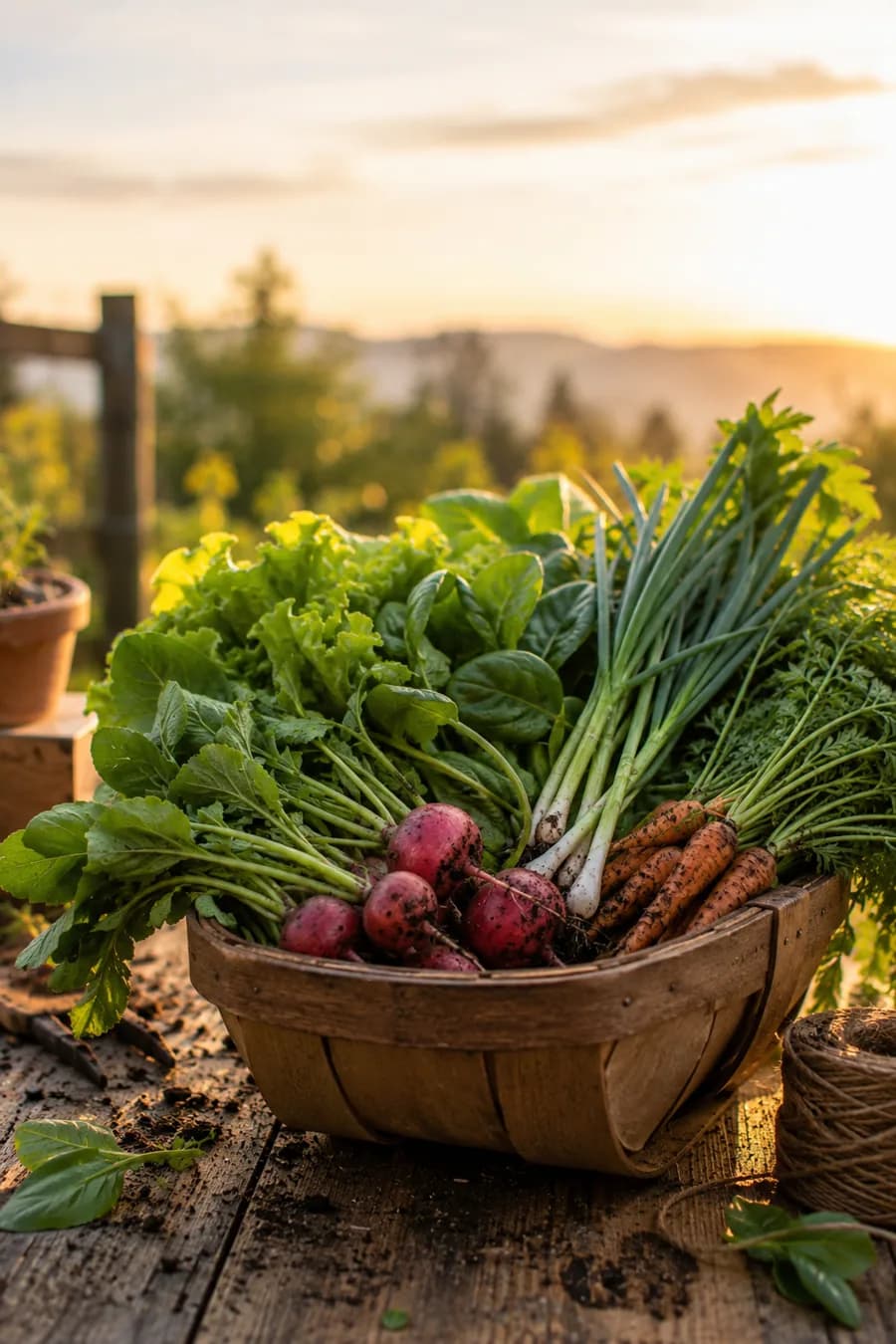
12 Fast-Growing Vegetables You Can Harvest in Under 60 Days
Gardening teaches patience. It also teaches that the gap between planting and harvesting is one of the hardest parts for new gardeners to survive. If you've started a plot, sown seeds, and are staring at bare soil wondering when anything will happen, this list is for you.
Every vegetable here goes from seed to harvest in 60 days or less under reasonable conditions. Some hit the table in under four weeks. All are genuinely useful in the kitchen, beginner-friendly, and forgiving enough to succeed without amended soil, raised beds, or years of experience.
Days-to-maturity figures are from seed, under typical growing conditions. Actual timing varies with temperature, soil quality, and climate — a warm season accelerates everything; a cool one slows it down.
1. Radishes — 22 to 30 Days
Radishes are the gold standard of quick gardening satisfaction. 'Cherry Belle' — a round, red All-America Selections winner — is ready to pull in 22–24 days. 'French Breakfast' takes about 25 days and produces elongated, mild roots that are excellent thinly sliced on bread with butter.
Direct sow ½ inch deep, 1 inch apart in rows. Thin to 2–3 inches once seedlings are up. Harvest when roots reach ¾ to 1 inch across — don't wait too long, or they become pithy and sharp. Radishes also serve a useful secondary purpose: their quick germination marks rows of slower seeds like carrots while the slower seedlings are still invisible underground.
2. Arugula — 30 to 40 Days
Arugula grows aggressively in cool weather. Baby leaves are ready at 30 days; full leaves at 40. It thrives in spring and fall but bolts fast in heat, so prioritize it now and again in late August.
Broadcast sow seeds over the surface and press them lightly into soil — they need light to germinate. Cut-and-come-again harvests work well: snip leaves above the crown and the plant regrows. Sow a small patch every three weeks for continuous arugula from spring through fall. Flavor ranges from nutty and mild when young to peppery and assertive as plants mature.
3. Spinach ('Space') — 39 to 42 Days
'Space' is a standout variety: smooth, dark green leaves, excellent disease resistance, and consistent performance in cool and shoulder-season gardens. At 39–42 days to maturity, it's among the fastest-maturing spinaches available, and it won an AAS Award in 1987 for good reason.
Spinach germinates best when soil is 45–65°F and slows or stops above 75°F — timing matters more than almost any other factor. In late spring, sow as early as soil can be worked. Harvest outer leaves progressively or cut the whole plant at soil level once it sizes up. A cut plant often regrows for a second harvest before bolting.
4. Lettuce ('Black Seeded Simpson') — 45 Days
'Black Seeded Simpson' has been in American gardens since the 1850s and remains one of the most widely grown looseleaf varieties. The reason is simple: it's fast (45 days to full head, harvestable as baby greens at 30), productive, and mild-flavored enough to suit almost everyone.
Lettuce grows well in containers, raised beds, and in-ground plots. It tolerates partial shade better than most vegetables — four to six hours of sun is adequate — which makes it useful for spots other crops can't use. Succession sow every two weeks through May. Once summer heat arrives, switch to heat-tolerant varieties like 'Jericho' or 'Sierra' for continued production.
5. Bok Choy ('Joi Choi') — 45 to 50 Days
'Joi Choi' is a hybrid bok choy that produces large, upright heads with thick white stalks and deep green leaves. It matures in 45–50 days and has better bolt resistance than older varieties — a practical advantage when spring turns warm faster than expected.
Sow ½ inch deep and thin to 8–10 inches apart. Harvest outer stalks continuously for a long season, or cut the whole head at the base. It's versatile in the kitchen: stir-fried, halved and grilled, braised, or added raw to salads when young. The stems have a satisfying crunch that holds up in high-heat cooking.
6. Bush Beans ('Contender') — 49 Days
'Contender' is one of the most reliable bush beans ever developed. Matures in 49 days, tolerates cooler soil temperatures than most beans, and carries strong mosaic virus resistance — important in regions with aphid pressure. The pods are round, stringless, and excellent for fresh eating and preserving.
Direct sow 1 inch deep after soil reaches 60°F. Beans don't transplant well, so direct sowing is the only practical approach. A 10-foot row yields enough for regular fresh harvests; succession sow every two to three weeks from late spring through midsummer for continuous production into fall.
7. Kale ('Red Russian') — 50 Days
'Red Russian' kale functions as two crops in one. At 25–30 days, the baby leaves are tender enough for raw salads — mild, slightly sweet, nothing like the tough, bitter kale that puts people off. At full maturity (50 days), the lobed blue-green leaves with purple-red veining are the basis for everything from chips to braises.
It also tolerates variable conditions better than most greens: light frost, mild heat, and inconsistent moisture don't devastate it the way they do lettuce and spinach. If you're growing only one brassica, 'Red Russian' delivers the longest useful harvest window.
8. Turnips ('Purple Top White Globe') — 50 Days
Turnips are chronically underrated. 'Purple Top White Globe' — the standard market variety for over a century — matures in 50 days and delivers two crops: roots and greens. Harvest the tops as a cooking green throughout the season; the roots when they're 2–3 inches across, before they go woody.
The greens are excellent sautéed with garlic and olive oil. The roots are mild and slightly sweet when harvested young — a far cry from the bitter, overgrown turnips that give this vegetable a bad reputation. Succession sow every three weeks; they're equally productive in spring and fall.
9. Snap Peas ('Sugar Ann') — 52 Days
'Sugar Ann' won an AAS Award in 1984 and remains one of the best snap peas for home gardens. It's a compact bush type — 18–24 inches tall, minimal staking required — and produces sweet, crunchy pods ready in 52 days. Eat them straight off the vine, slice into salads, or cook briefly to preserve the snap.
Peas are a cool-season crop. Sow as soon as soil can be worked in spring, or start a fall crop eight to ten weeks before your first fall frost. Once summer heat sets in, pea plants decline and stop producing regardless of care. Get them in early and enjoy the spring window.
10. Scallions / Green Onions — 55 to 60 Days
Scallions don't require the curing time that bulb onions need — harvest the whole plant, green tops and all, once it reaches pencil thickness. 'Evergreen Hardy White' is a workhorse variety: heat-tolerant, mild-flavored, and consistent across seasons.
Sow densely (½ inch apart) and harvest by thinning — pull every other plant as they size up, leaving the rest to continue growing. Or start them in blocks and harvest the whole planting at once. They perform exceptionally in containers, where even a 6-inch pot holds enough for regular kitchen use. Succession sow every three weeks for a continuous supply.
11. Summer Squash ('Gold Rush') — 50 Days
Most summer squash varieties mature in 50–55 days, making them significantly faster than their reputation suggests. 'Gold Rush' is a yellow zucchini that produces straight, bright yellow fruits consistently — earlier and less variable than many heirloom yellow squash varieties.
Harvest when fruits are 4–6 inches long. Leaving them to grow larger reduces overall plant productivity; once a squash reaches 10+ inches, the plant puts energy into seed development rather than new fruit. One or two plants is genuinely enough for most households. The joke about leaving zucchini on neighbors' porches exists for a reason.
12. Cucumbers ('Spacemaster') — 60 Days
'Spacemaster' was developed for small-space and container growing — vines reach 24–36 inches rather than the 6-foot sprawl of full-sized varieties, but still produce full-sized 7-inch cucumbers. It matures in 60 days and handles the heat and humidity of summer better than many compact varieties.
Cucumbers need warm soil (65°F minimum) and consistent moisture. Once they establish, they produce heavily. Harvest frequently — cucumbers left on the vine send a signal to the plant to slow production. If you let a few go yellow and seed on the vine, the plant considers its work done.
Getting Started
The simplest approach: pick three or four that appeal to you, buy a packet each, and plant them this week. Radishes, arugula, and lettuce can go in the ground today in most of the US. Beans, squash, and cucumbers want warm soil — they're your late-spring and summer roster.
For a planting calendar that shows exactly when to sow each of these for your specific location — including your local soil temperature windows and frost dates — GreenPrint generates a free 12-month schedule personalized to your zip code at greenprint.garden. It takes the guesswork out of timing so you can focus on actually gardening.