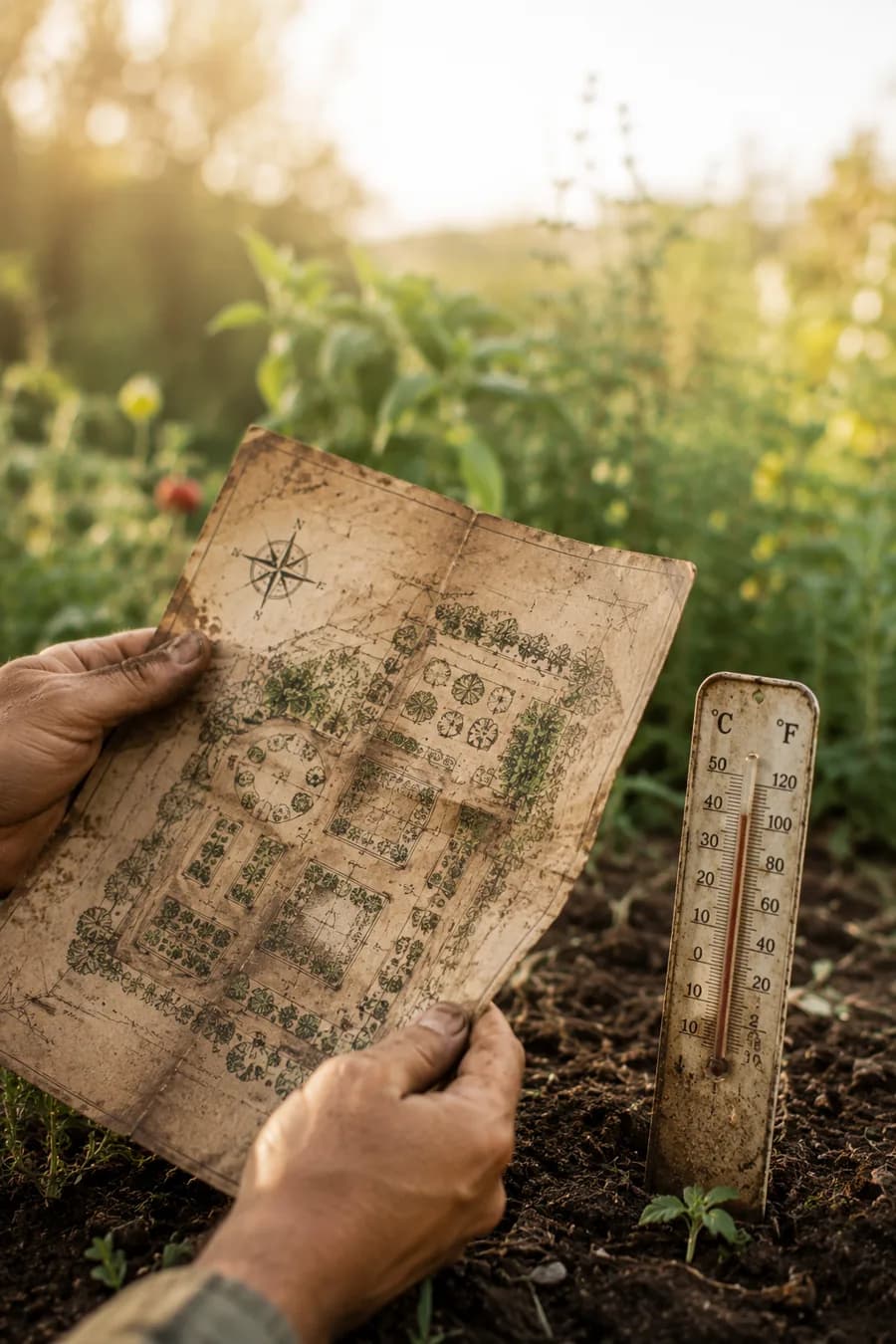
If you've ever bought a plant at a nursery and noticed a small tag that says "Zone 5–9" or "Zones 7b–10a," you've already encountered the USDA Plant Hardiness Zone system — even if you didn't know what it meant. Understanding your zone is one of the first things any gardener should learn, because it determines what can survive in your garden, when to plant, and when to expect frost.
Here's everything you need to know.
What Is a USDA Hardiness Zone?
The USDA Plant Hardiness Zone Map divides the United States into 13 zones (and sub-zones labeled "a" and "b"), based on the average annual minimum winter temperature. The lower the zone number, the colder your winters get.
- Zone 1: Extremely cold (Alaska's interior, -60°F winters)
- Zone 6: Moderate (-10°F to 0°F, think New York or Kansas City)
- Zone 9: Warm (20°F to 30°F, Houston or Sacramento)
- Zone 12–13: Tropical (Hawaii, Puerto Rico — nearly frost-free)
Each zone is split into "a" and "b" sub-zones, representing a 5°F difference. So Zone 8a is slightly colder than Zone 8b. For most practical gardening purposes, these sub-zones fine-tune your planning.
Why Do Zones Matter?
Your zone tells you two critical things:
1. Which perennials can survive your winters. A lavender plant labeled "Zone 5–9" will survive winters down to -20°F (Zone 5) and up to whatever Zone 9 throws at it. Plant it in Zone 4? It'll die in winter. Plant it in Zone 10? It might struggle with the heat instead.
2. When to plant warm-season crops. Every zone has a typical "last frost date" in spring and "first frost date" in fall. These dates bracket your outdoor growing season. Planting tomatoes before last frost risks losing them to a surprise cold snap. Waiting too long after first frost in fall shortens your harvest window.
How to Find Your Zone
The easiest way: visit the USDA Plant Hardiness Zone Map and enter your zip code. You'll get your exact zone instantly.
Or just use GreenPrint — enter your zip code and we'll tell you your zone, your frost dates, and exactly what to plant this month.
Common Mistakes Beginners Make with Zones
Mistake 1: Ignoring the zone entirely. This is the most common beginner mistake. You buy plants based on what looks pretty at the nursery, take them home, plant them, and watch them die in August heat or February frost. Always check the zone label on perennials before you buy.
Mistake 2: Treating zones as the only factor. Zones only measure minimum winter temperature. They don't account for summer heat, humidity, rainfall, soil type, or microclimates. A Zone 7 garden in rainy Portland is very different from a Zone 7 garden in dry Albuquerque. Use zone as your starting point, not your entire playbook.
Mistake 3: Forgetting about microclimates. Your backyard might be a slightly different zone than your front yard. A south-facing wall radiates heat. A low spot in your garden collects cold air. A fence can block wind and keep things a half-zone warmer. Pay attention to these nuances over time.
Mistake 4: Planting too early — or too late. Knowing your zone gives you frost dates, but weather is unpredictable. The average last frost date in your zone is just that — an average. In any given year, frost could come a week earlier or later. Watch the forecast, not just the calendar.
Mistake 5: Assuming zone = planting month. Even within the same zone, planting windows vary by crop. Cool-season crops like lettuce and broccoli go in before last frost. Warm-season crops like tomatoes and squash go in after. Knowing your zone is step one; knowing what to plant when is step two.
Zone-By-Zone Quick Reference
Here's a rough overview of when to plant warm-season crops outdoors:
| Zone | Last Frost (Avg.) | Plant Tomatoes Outdoors |
|---|---|---|
| 4 | May 5–10 | Late May |
| 5 | April 15–20 | Early May |
| 6 | April 5–10 | Mid-April |
| 7 | March 22–28 | Early April |
| 8 | March 8–15 | Mid-March |
| 9 | February 1–15 | Late February |
| 10 | January 15 | Year-round possible |
Beyond Zones: Frost Dates Matter Too
Your USDA zone tells you about winter minimums. Frost dates tell you about your actual growing season window. Both are essential.
- Last spring frost: The approximate date when you can safely plant frost-sensitive crops outdoors.
- First fall frost: The date when you should harvest remaining crops or cover them.
The days between these two dates = your growing season. In Minnesota (Zone 4), that might be 120 days. In Houston (Zone 9), it's 270+ days.
Start With Your Zone, Then Get Specific
Here's the practical takeaway: your USDA zone is the foundation. Once you know it, you can:
- Choose perennials that will survive your winters
- Know your frost dates so you can time plantings correctly
- Find the crops that are in season right now for your region
That last part is exactly what GreenPrint was built for. Enter your zip code and we'll show you what's in season this month, sorted by difficulty — so you know exactly what to plant whether you're a total beginner or a seasoned grower.
Your garden starts with your zone. Let's figure yours out. 🌱