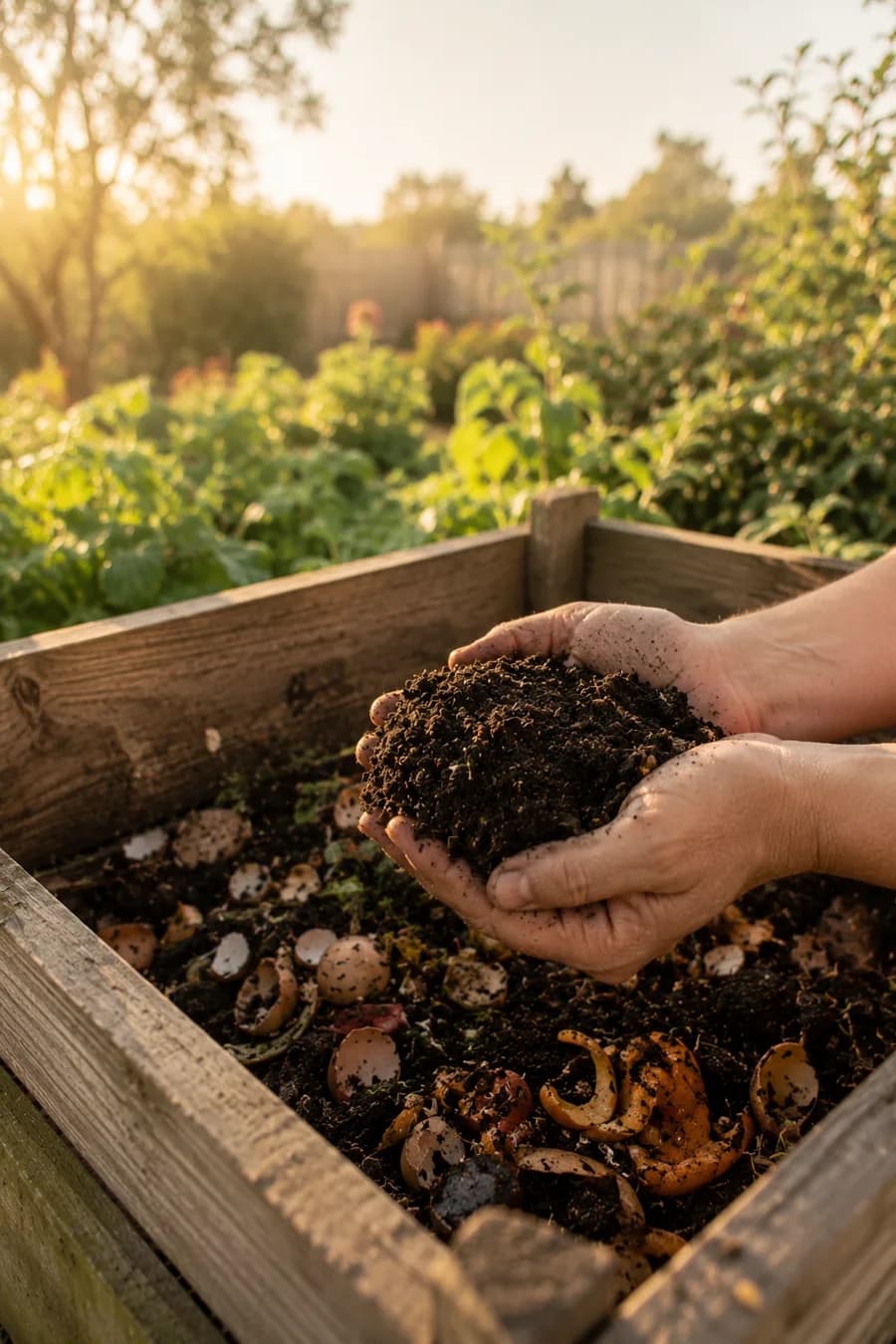
If you've ever tossed a banana peel or a pile of dead leaves into the trash and thought, there has to be a better use for this — you're already halfway to becoming a composter. Composting is one of the simplest, most rewarding things a home gardener can do. It costs almost nothing, cuts down on waste, and produces something your plants absolutely love.
Here's everything you need to know to get started.
What Is Compost (and Why Does Your Garden Need It)?
Compost is decomposed organic matter — the natural end result of leaves, food scraps, and plant trimmings breaking down over time. When you add it to your garden beds, it improves soil structure, feeds beneficial microbes, and slowly releases nutrients that plants can actually use.
Think of it as a long-game fertilizer that also makes your soil easier to dig, better at holding water, and more resistant to disease. Store-bought compost is great, but homemade compost is better — because you control what goes in.
The Two Things Every Compost Pile Needs
Composting is basically just managed decomposition, and it works on a simple ratio: browns + greens.
Browns (carbon-rich materials):
- Dry leaves
- Cardboard and paper (torn up)
- Straw
- Wood chips or sawdust (untreated)
- Paper bags, newspaper
Greens (nitrogen-rich materials):
- Fruit and vegetable scraps
- Coffee grounds and filters
- Fresh grass clippings
- Plant trimmings
- Eggshells (technically neutral, but great to add)
A good rule of thumb is roughly 2–3 parts browns to 1 part greens by volume. Too many greens and your pile gets slimy and smelly. Too many browns and it just sits there not doing much.
You also need two more things: moisture and air. Your pile should feel like a wrung-out sponge — damp but not dripping. Turning it every week or two introduces oxygen and speeds things up considerably.
What NOT to Put in Your Compost
This is where beginners sometimes get tripped up. Avoid adding:
- Meat, fish, and bones — attracts pests and creates odor
- Dairy products — same problem
- Oily or greasy food — slows decomposition
- Pet waste — can introduce pathogens
- Diseased plants — the disease can survive and spread
- Treated wood or glossy paper — introduces chemicals you don't want in your soil
When in doubt, leave it out.
Choosing Your Composting Method
You don't need a fancy setup to compost. There are a few easy options depending on your space:
Open pile: The simplest approach. Just pile your materials in a corner of your yard, at least 3x3 feet in size (smaller piles don't hold heat well). Cheap, easy, and works fine — just slower.
Enclosed bin: A plastic compost bin or tumbler keeps things tidier, deters pests, and retains moisture better. Great for smaller yards or neighborhoods with HOA rules.
Worm bin (vermicomposting): Use red wiggler worms to compost kitchen scraps in a contained bin — perfect for apartment dwellers or anyone without much outdoor space. Worm castings are incredibly nutrient-rich.
How Long Does Composting Take?
Honestly? It depends. A hot, active pile that you turn regularly can produce finished compost in 4–8 weeks. A lazy pile that you just add to and ignore might take 6–12 months.
Finished compost looks like dark, crumbly soil and smells earthy — like a forest floor after rain. It should not smell like rotting garbage. If it does, your pile is too wet or doesn't have enough air circulation.
How to Use Your Compost
Once your compost is ready, the fun part begins. Here's how to put it to work:
- Mix into planting beds before the season starts — work 2–3 inches into the top 8–10 inches of soil
- Use as mulch around existing plants (keep it a few inches away from stems)
- Top-dress lawns in spring or fall — spread a thin layer and let it settle in
- Make compost tea by steeping compost in water for 24–48 hours and using it as a liquid fertilizer
Even a small amount of compost goes a long way. A single wheelbarrow's worth can noticeably improve a 4x8 raised bed.
Start Small, Stay Consistent
The biggest mistake beginners make is overthinking it. You don't need to get the ratio perfect. You don't need a thermometer or a fancy bin. You just need to start — toss in those coffee grounds, rake in some leaves, and let nature do the rest.
Once composting becomes a habit, it's genuinely hard to go back to throwing that stuff away.
Ready to grow smarter? GreenPrint.garden gives you personalized planting schedules, soil tips, and garden guidance tailored to your exact zone and climate. Start your free garden plan today.