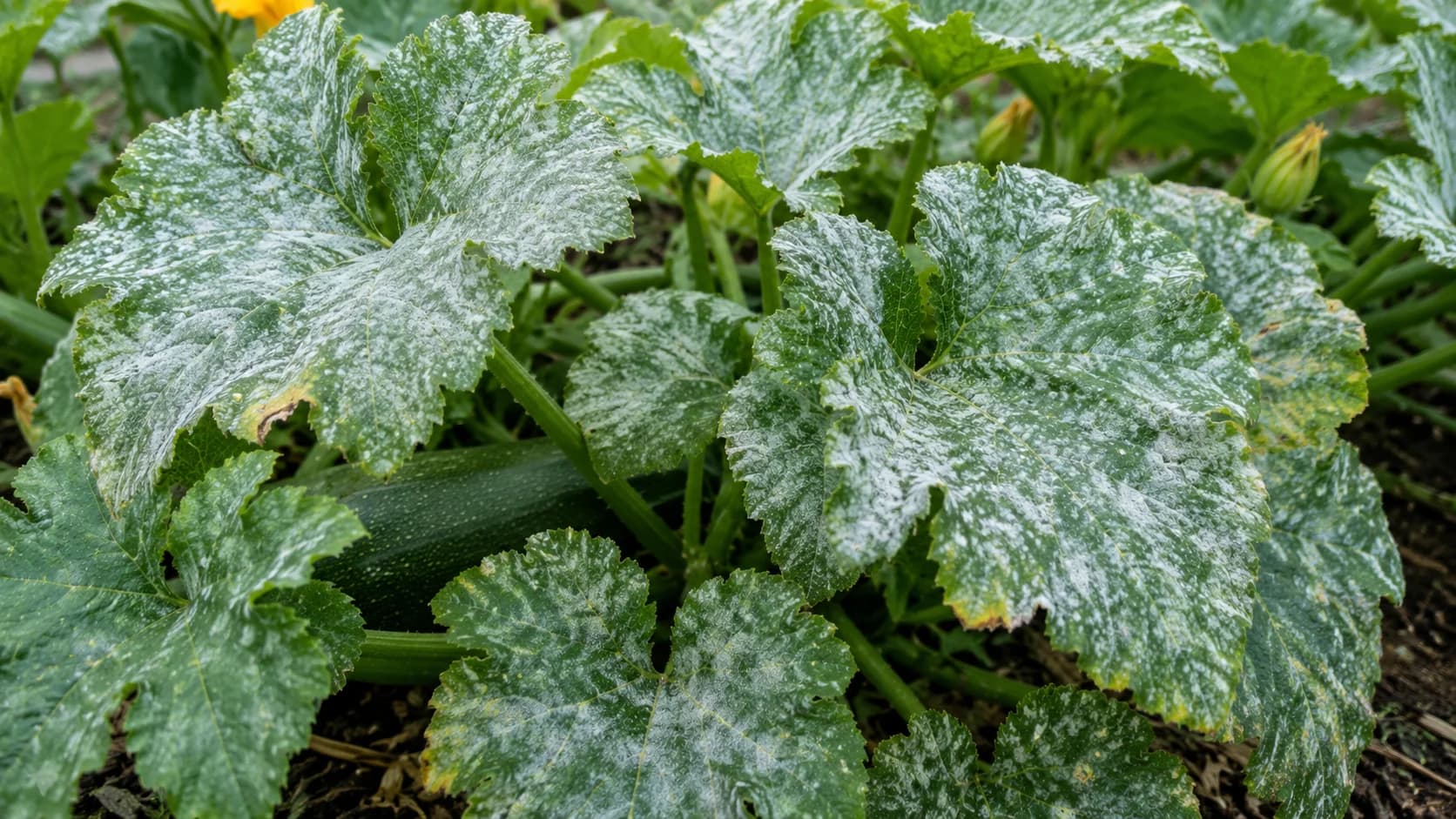
Powdery Mildew on Squash and Cucumbers: How to Identify and Stop It
You notice it first on the older leaves — a grayish-white dusty coating, like someone shook chalk over the plant overnight. The vine still looks healthy overall. You figure it's nothing. Two weeks later, the coating has spread to younger leaves, the plant looks tired, and your squash or cucumber production has dropped off noticeably.
That's the powdery mildew arc, and once you've seen it you'll recognize it immediately every time after. The good news: powdery mildew is rarely fatal to a well-established plant. The bad news: if you ignore it through midsummer, it will end your season earlier than it should. Catching it early — and understanding how this particular fungus works — makes all the difference.
What Powdery Mildew Actually Is
Powdery mildew on cucurbits (squash, cucumbers, zucchini, pumpkins, and melons) is caused primarily by two fungal species: Podosphaera xanthii and Golovinomyces cichoracearum. The white powder you see is made up of fungal mycelium and spores — the fungus lives on the surface of the leaf rather than inside the plant tissue, which is what distinguishes it from downy mildew and most other fungal diseases.
Here's what surprises most gardeners: powdery mildew does not need wet leaves to establish itself. Unlike early blight, downy mildew, or black spot on roses, it actually prefers warm, dry weather with moderate humidity. High relative humidity without free water on the leaf surface is ideal — which is exactly the condition you get during June and July in much of the Southeast, Midwest, and East Coast. Warm days in the 80s–90s, nights cooling to 60–65°F? That's a powdery mildew forecast.
Spores spread through air movement. One infected plant in your garden can spread to every cucurbit you have within a week when conditions are favorable.
Identifying It Correctly
Powdery mildew appears as white or grayish powder on upper leaf surfaces. It starts as small circular patches and expands to cover the entire leaf face. Affected leaves may eventually yellow and die, but the plant typically continues producing for a while after infection begins — which is part of why gardeners often dismiss early signs.
Don't confuse powdery mildew with:
Downy mildew: Shows as yellowish angular patches (following leaf veins) on the upper surface, with a gray-purple fuzzy growth on the underside of the leaf. Entirely different pathogen, requires different treatment, spreads under cool wet conditions rather than dry heat.
Cucumber mosaic virus: Produces mottled, distorted, irregular leaf patterns. Not a powder coating, and no treatment will reverse it — remove affected plants.
Sunscald or pesticide residue: These won't spread or multiply. If you're uncertain, watch the affected area for 5–7 days. If the coverage is growing and spreading to new leaves, it's alive — treat it.
Treatment: What Actually Works
Potassium Bicarbonate
The best-performing organic treatment for active powdery mildew is potassium bicarbonate, sold under trade names like Kaligreen and MilStop. It raises the surface pH of the leaf to a level that fungal spores cannot survive. Mix according to label directions — typically around 3 tablespoons per gallon of water, with a small amount of horticultural oil or castile soap added as a spreader-sticker. Apply in early morning or evening to avoid leaf scorch, and reapply every 7–10 days.
Potassium bicarbonate works both as a treatment and a preventive — it kills existing surface spores and prevents new ones from establishing. It's genuinely one of the most effective tools in the organic toolkit for this specific problem.
The Milk Spray
This sounds like folk medicine, but replicated trials have shown it works: diluted milk (roughly 30–40% whole milk to water) applied to foliage significantly suppresses powdery mildew. The mechanism involves whey proteins and a mild pH effect on the leaf surface. It's not as potent as potassium bicarbonate against active infection, but it's inexpensive, non-toxic to people and pollinators, and available from any grocery store. Spray on dry leaves in the morning so the mixture dries completely before temperatures peak.
Neem Oil (Preventive Use)
Neem oil is most effective as a preventive — applied before infection or at the very first sign. Once you have significant coverage across multiple leaves, neem alone won't turn the tide. But if you're applying it on a regular 7–10 day schedule from transplant time, it can meaningfully delay powdery mildew onset through the vulnerable early season.
Important caveats: always apply neem when air temperatures are below 90°F, and apply when bees are not actively foraging — early morning or evening. Neem can harm beneficial insects, including pollinators, if sprayed during peak activity hours.
Remove Heavily Infected Leaves
When a leaf is more than 50% covered in white powder, it will not recover. Remove it and dispose of it in the trash or bury it in a fallow area — not the compost pile, which won't reliably kill powdery mildew spores at home composting temperatures. Removing heavily infected material won't cure the plant, but it eliminates a major source of ongoing spore dispersal and helps your treatments work better on the remaining foliage.
What Doesn't Work
Overhead watering to wash off spores: You'll encounter this advice occasionally, but wetting leaves doesn't reliably eliminate powdery mildew and actively worsens other fungal diseases that do need moisture. Stick to drip irrigation or careful hand-watering at the base.
Waiting it out: Powdery mildew is not self-limiting in summer conditions. It will spread until the plant is exhausted, the weather cools significantly, or you intervene.
Copper fungicides: Copper-based sprays are effective against bacterial diseases and downy mildew but have poor efficacy against powdery mildew specifically. It's the right tool for the wrong problem.
Improving Airflow and Spacing
One structural intervention worth making: improved plant spacing. Powdery mildew thrives in still, humid air pockets around dense foliage. Squash plants allowed to sprawl and pile on each other with no airflow will consistently have worse mildew than plants with room to breathe.
For cucumbers and vining squash, trellis vertically wherever possible — this dramatically improves air circulation around foliage and keeps fruit clean. For bush zucchini and other compact types, periodically remove a few of the oldest leaves from the base of the plant to open up airflow at ground level.
Avoid heavy nitrogen fertilization mid-season. Lush, fast-growing soft tissue is more susceptible to powdery mildew than steady, moderate growth fed by balanced nutrition.
Choosing Resistant Varieties for Next Season
The most effective long-term strategy is growing varieties with built-in resistance. Plant breeders have made real progress on cucurbits in particular:
Cucumbers: 'Marketmore 97' has meaningfully improved tolerance over the original 'Marketmore 76'. 'Diva' (AAS winner, 2002) is notably tolerant and sets fruit without pollination, which also helps during heat when bees are less active. 'Fanfare' (AAS winner, 1994) has a good disease resistance package for a slicing cucumber.
Zucchini: 'Dunja' is specifically bred for powdery mildew resistance and performs very well in humid climates — widely available from major seed suppliers and the clearest choice for PM-prone gardens.
Winter squash and acorn squash: 'Honey Bear' acorn squash is the standout here — a well-established AAS winner with documented powdery mildew resistance. Worth growing even if you don't love acorn squash, just to see what a PM-resistant cucurbit can do in your garden by comparison.
Pumpkins: 'Magic Lantern' and naked-seed types like 'Pepitas' show better PM tolerance than most standard carving varieties in humid conditions.
Resistance doesn't mean immunity. In a severe year with ideal conditions for the fungus, even resistant varieties will show some infection. But "some" versus "devastating and season-ending" is a meaningful difference.
When to Accept the Loss and Move On
If your zucchini is a white-coated ruin by late July and you're in Zone 7 or 8, it may simply be time to pull it and use that space for a fall cucumber or a direct-sown fall squash. Fighting severe powdery mildew in the back half of summer is often a losing battle, and that garden real estate can work harder for you with a fresh start and a resistant variety.
Keep notes. If powdery mildew shows up on the same plants, in the same corner, every year — that's information about airflow and microclimate worth acting on before next season, not just a recurring problem to manage.
Track Your Garden's Health Year-Round
For month-by-month guidance on when to watch for specific diseases, when to apply preventive treatments, and what to plant for each part of the season, the free 12-month planting calendar at greenprint.garden builds you a custom schedule around your specific location. Enter your zip code and get a tailored guide — it's free and takes about 30 seconds.