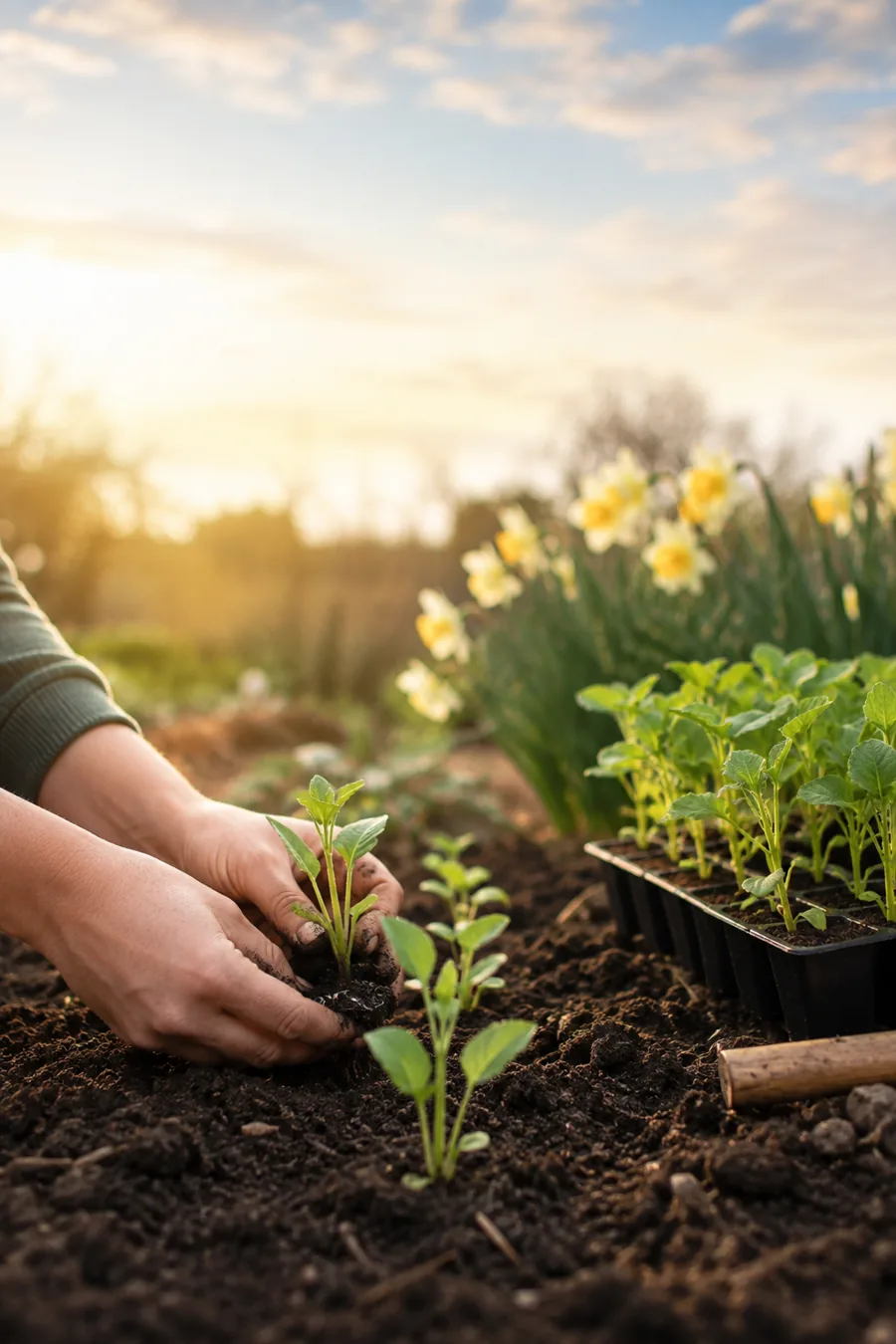
Spring 2026 is here, and across the country, gardeners are dusting off their trowels, prepping raised beds, and watching last frost dates tick closer on the calendar. Whether you're planting your first tomato or your fiftieth, this guide will walk you through what's in season right now and how to make the most of the spring planting window.
Where Spring Planting Stands Right Now
Across the US in April 2026:
- Zones 9–10 (Houston, Miami, Phoenix, Los Angeles): Deep into spring planting season. Warm-season crops are already in the ground — or should be. Focus on succession planting and staying ahead of heat.
- Zones 7–8 (Dallas, Atlanta, Washington DC, Seattle): Prime spring planting window. Last frost has passed or is imminent. Time to move transplants outdoors and direct-sow warm-season crops.
- Zones 5–6 (Chicago, Denver, Philadelphia, Kansas City): Last frost typically hits April–May. Start seeds indoors if you haven't already, or buy transplants to harden off now.
- Zones 3–4 (Minneapolis, northern New England): Patience. Last frost could be as late as mid-May. Focus on cool-season crops outdoors and seeds under lights indoors.
Don't know your zone? Enter your zip code at GreenPrint and we'll pull your exact zone and frost dates in seconds.
How to Start Strong This Spring
Step 1: Know your last frost date. This single date determines when you can safely move warm-season plants outdoors without risking frost damage. Check your zone, look it up, and write it somewhere visible in your garden space.
Step 2: Decide — seeds or transplants? If you're starting from seeds indoors, most warm-season crops need 6–8 weeks before transplanting outdoors. Tomatoes, peppers, and eggplant started now could go outside in late May for Zone 6 gardeners. If you're behind on starting seeds, skip straight to buying transplants from your local nursery — no shame in that, especially for beginners.
Step 3: Prep your soil. Before planting anything, get your soil ready. Work in 2–3 inches of compost, break up compacted areas, and check drainage. Happy roots = happy plants. This one step is worth more than any fertilizer.
Step 4: Start small and succeed. The biggest mistake new gardeners make is planting too much. Grow 3–4 things well rather than 15 things poorly. You'll learn faster, spend less money on failures, and actually enjoy the process.
The Top 10 Beginner Plants for Spring 2026
These are the most forgiving, productive, and rewarding plants for new gardeners across most of the US this spring:
1. 🍅 Cherry Tomatoes Fast-maturing, prolific, and actually harder to kill than full-size tomatoes. Sun Gold and Sweet 100 are foolproof favorites. Give them a cage and a sunny spot and they'll produce for months.
2. 🥒 Cucumbers Direct-sow after last frost and they grow fast. Pole varieties save space by climbing a trellis. Regular watering is the key — inconsistent moisture causes bitterness.
3. 🌿 Basil Plant it once, harvest it all summer. Pinch off flower heads as they form and the plant will keep producing. Bonus: it repels pests near tomatoes.
4. 🫑 Zucchini / Summer Squash Famous for overproducing. Two plants will feed your family and half the neighborhood. Check them daily — they grow fast and zucchini left unharvested turns into a baseball bat.
5. 🥬 Leaf Lettuce Cooler zones can still get several harvests of cut-and-come-again lettuce in April. Warmer zones should rush this one — it'll bolt in summer heat. Start with a heat-tolerant variety like Jericho or Nevada.
6. 🌿 Mint Essentially impossible to kill. Grows in any decent soil, sun or partial shade. One caveat: grow it in a container or it'll take over your entire garden. Seriously.
7. 🫘 Green Beans Direct-sow after last frost for a no-fuss crop. Bush beans don't need staking and produce quickly — often within 50–55 days of planting. Do successive plantings every 2 weeks for continuous harvests.
8. 🌻 Sunflowers Direct sow after last frost and watch them take off. They're hard to kill, attract pollinators, and look spectacular. Mammoth and Lemon Queen are great starter varieties.
9. 🌸 Marigolds Not just for looks — marigolds repel nematodes, aphids, and other pests. Plant them as borders around your vegetable beds. French marigolds are compact; African marigolds are tall and bold.
10. 🌶 Jalapeños If you want to venture beyond bell peppers, jalapeños are surprisingly easy to grow. They're more heat-tolerant than bells and produce heavily. One plant = a lot of jalapeños.
What to Plant by Zone This Month
Zone 9–10: Focus on heat-tolerant herbs (basil, rosemary, thyme), okra, sweet potatoes, and southern peas. Keep your tomatoes and peppers watered deeply.
Zone 7–8: Get tomatoes, peppers, cucumbers, squash, beans, and basil in the ground now. The window is open.
Zone 5–6: Transplant cool-season crops (lettuce, broccoli, peas) outdoors now. Wait until after last frost for warm-season crops.
Zone 3–4: Direct sow peas, spinach, and cold-hardy greens outdoors. Keep warm-season seeds and transplants under lights indoors.
Don't Overthink It — Just Get Started
Spring gardening is forgiving. Most of the "mistakes" beginners worry about aren't fatal — plants are more resilient than we give them credit for. The real mistake is waiting until the window passes because you didn't feel ready.
Pick two or three crops from the list above, plant them this week, and learn as you go. That's how every great gardener started.
And if you want to take the guesswork out of timing, GreenPrint will show you exactly what's in season for your zip code right now — with real zone data, frost dates, and difficulty ratings for every plant. Free to use, no signup required.
Happy spring planting. 🌱