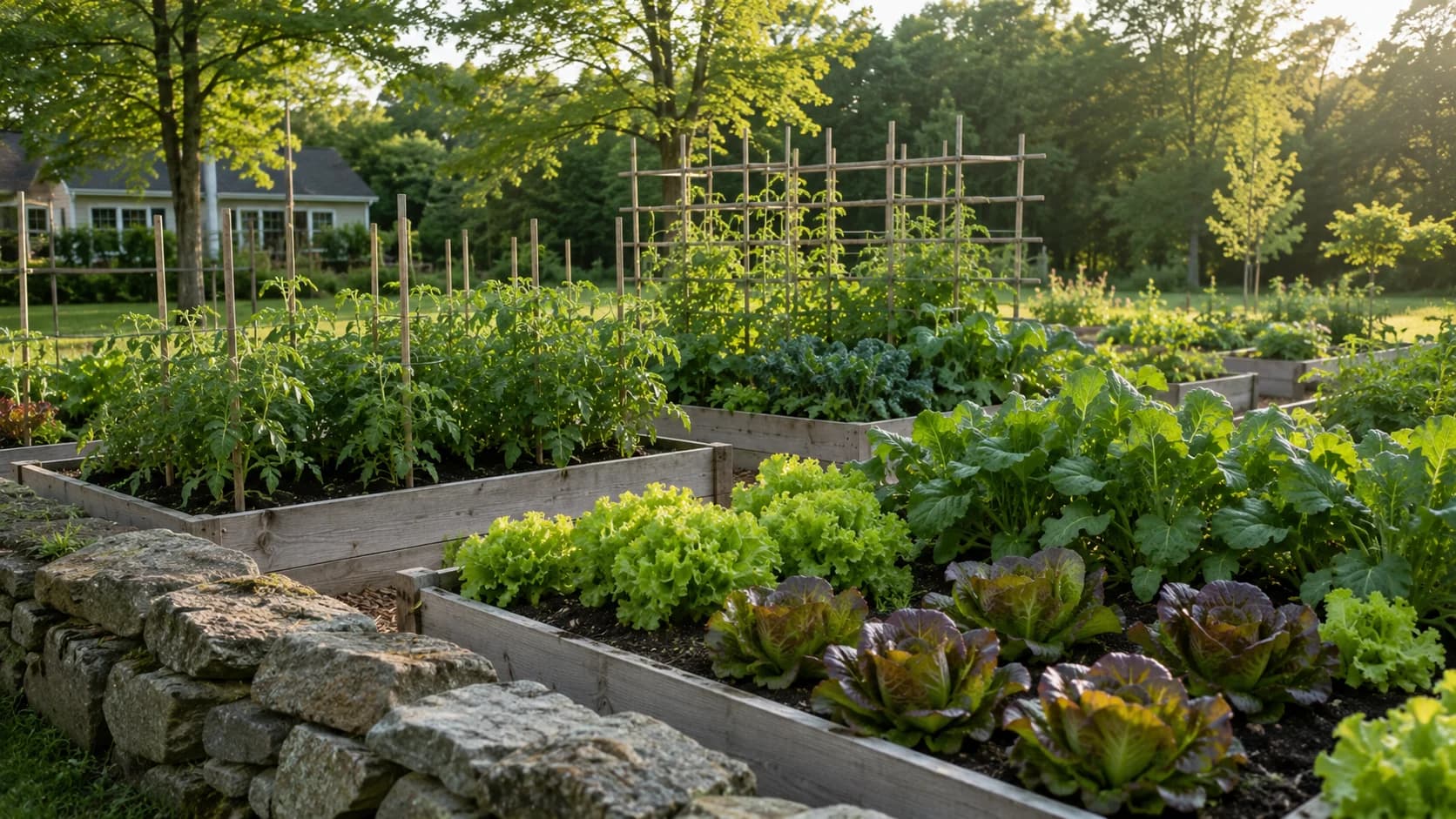
What to Plant in June in the Northeast — From Maine to Maryland
June in the Northeast is the moment gardeners have been waiting for since February. The last frost is behind you, the soil is finally warm enough to matter, and a full growing season stretches ahead. But "the Northeast" covers significant ground — Burlington, Vermont (USDA Hardiness Zone 5b) has a meaningfully different June than Philadelphia, Pennsylvania (Zone 7b). What you plant and how urgently you need to plant it depends a lot on where you are.
This guide breaks the Northeast into three growing regions based on zone and climate behavior: Northern New England (Zones 5a–6a), Southern New England and the Hudson Valley (Zones 6b–7a), and the Mid-Atlantic (Zones 7a–7b). Use the section that fits your location, then read the shared guidance at the end — some things are true across the whole region.
When Is Your Last Frost?
Before planting out warm-season transplants or direct-sowing heat-loving crops, your soil needs to be past the last frost date and above 55–60°F at the 4-inch depth. In most of the Northeast, that window opens as follows:
- Northern New England (Zone 5a–5b): Last frost May 20–June 5. In Zone 5a valleys — northern Vermont, interior Maine — June 1 is a reasonable transplant target. Wait until June 5–10 if late frost warnings persist.
- Southern New England and Hudson Valley (Zone 6b–7a): Last frost April 25–May 15. By June 1, you're comfortably clear. Soil temps are usually above 60°F across the region.
- Mid-Atlantic (Zone 7a–7b): Last frost April 10–25. June arrives with soil already warm, and tomatoes planted in May are well established. June is transition month — you're finishing spring planting and starting to plan for fall.
Northern New England — Vermont, New Hampshire, Interior Maine (Zone 5a–6a)
Burlington, Vermont (Zone 5b) and Portland, Maine (Zone 6a) have roughly 120–150 frost-free growing days. June 1 is your real gardening new year — the moment you can finally commit to warm-season crops without looking over your shoulder at the forecast.
Plant in June:
- Tomatoes (transplants) — June 1–15 is your window. Use proven early varieties: 'Glacier' (55 days), 'Siletz', 'Siberian', and the reliable 'Early Girl'. Avoid long-season heirlooms like full-size 'Brandywine' (which needs 80–90 days and weeks of heat) unless you're extending the season with row fabric or a greenhouse.
- Peppers (transplants) — Go with early, compact varieties. 'Early Jalapeño', 'Lipstick' sweet pepper, or 'Corbaci' Italian frying pepper all ripen before the window closes. Full-season bells often don't make it in Zone 5 without season extension.
- Cucumbers — Direct-sow after June 5 when soil is 65°F+. 'Marketmore', 'Spacemaster', and 'National Pickling' all mature in 55–60 days, which fits the northern season well.
- Zucchini and summer squash — Direct-sow in early June. 'Black Beauty' or disease-resistant 'Dunja'. Squash vine borers (Melittia cucurbitae) arrive in late June to early July in northern New England — plant early enough to get a good harvest before they peak, or cover plants with row fabric until female flowers open.
- Bush beans — Direct-sow. 'Provider' (52 days) is excellent for Zone 5 because it germinates in cooler soil than most bean varieties. Succession-sow every 3 weeks through July 4 for continuous harvest.
- Sweet corn — Direct-sow by June 10. Short-season varieties give you better odds before frost: 'Peaches and Cream' (83 days), 'Quickie' (65 days). Sow in blocks of at least 4 rows for proper wind pollination — a single long row produces poorly.
- Basil — Wait until after June 10. Basil sulks when nights drop below 50°F, and the seedlings stall or turn purple. Start transplants and move them out once nights are reliably warm.
What NOT to plant in June in Zone 5:
Melons and watermelons need 80–110 frost-free days of sustained heat. They rarely deliver in Zone 5a–5b without aggressive season extension. A few short-season varieties are worth trying with black plastic mulch and row covers: 'Blacktail Mountain' watermelon (70 days) and 'Collective Farm Woman' melon (also around 70 days) have better odds than standard varieties.
Southern New England and Hudson Valley — Massachusetts, Connecticut, Rhode Island, Upstate New York (Zone 6b–7a)
Boston, Massachusetts (Zone 7a), Hartford, Connecticut (Zone 6b), and Albany, New York (Zone 6a) have 160–190 frost-free days. June is the best month of the year to be gardening in this region — everything you put in now has time to produce well before October.
Plant in early-to-mid June:
- Tomatoes (transplants) — You have more variety latitude here. 'Celebrity' is bulletproof and productive. 'Sun Gold' cherry tomato is in the all-time great category — sweet, prolific, and reliable everywhere from Boston south. Heirlooms like 'Brandywine', 'Cherokee Purple', and 'Green Zebra' are worth growing in this zone if planted by early June.
- Peppers and eggplant (transplants) — Full growing season for both. 'Jimmy Nardello' Italian frying pepper, 'Carmen' red bell, and 'Listada de Gandia' eggplant are reliable performers.
- Cucumbers — Direct-sow or transplant. 'Straight Eight' and 'Marketmore 76' are the workhorses.
- Summer and winter squash — Summer types: 'Dunja' zucchini or 'Patio Star' for smaller spaces. Winter types: 'Butternut' (85 days) and 'Delicata' (100 days) — get these in by June 15 to allow full maturity before frost.
- Sweet corn — Sow blocks through mid-June. 'Silver Queen' is the classic white sweet corn. 'Honey Select' (triplesweet, AAS winner) has excellent disease tolerance for the humid Northeast.
- Beans (bush and pole) — 'Blue Lake 274' bush bean is the standard. 'Kentucky Wonder' pole bean for vertical growing. 'Dragon Tongue' for something more interesting — yellow pods streaked with purple, harvest young.
- Basil, dill, cilantro — Direct-sow through mid-June.
- Melons — Ambitious but achievable. 'Honey Rock' cantaloupe (80 days) and 'Crimson Sweet' watermelon (85 days) both work in Zone 6b–7a with black plastic mulch and a hot spot in the garden.
Boston and Hartford gardens often stay cool enough to keep lettuce going into early June. Heat-tolerant 'Jericho' romaine or 'Sierra' lettuce in partial shade will extend your spring greens harvest further into the season than most gardeners expect.
Mid-Atlantic — New York City, New Jersey, Pennsylvania, Delaware, Maryland (Zone 7a–7b)
Philadelphia, Pennsylvania (Zone 7b), New York City (Zone 7b), and Baltimore, Maryland (Zone 8a) have 200+ frost-free days. You're not racing against fall in June — you're building a garden that will produce through October or November with the right management.
What June means for Mid-Atlantic gardeners:
By early June, warm-season transplants should already be established. If tomatoes and peppers aren't in the ground, plant them the first week of June at the latest — they need maximum growing time before sustained summer heat slows fruit set. If you're starting late, buy larger transplants (gallon pots rather than cell packs) to compensate.
Direct-sow in June:
- Sweet potatoes — Slips go in once soil hits 65°F+. 'Beauregard' and 'Georgia Jet' both perform well across the Mid-Atlantic. Space 12–18 inches in rows 36 inches apart.
- Okra — Zone 7a–7b is okra territory. Direct-sow after June 1. 'Clemson Spineless' (57 days) is the classic; 'Burgundy' (60 days) has red ornamental pods. Soak seeds overnight before planting to speed germination.
- Second and third plantings of beans — Keep succession-sowing bush beans through late June for fall harvests in September and October.
- Sunflowers — Direct-sow for late-summer blooms that attract pollinators and goldfinches.
Begin fall crop planning: Late June is when experienced Mid-Atlantic gardeners start broccoli, cauliflower, and cabbage seedlings indoors for August transplanting. The window seems far away — it isn't.
What Works Everywhere in the Northeast in June
Some crops are forgiving enough that regional differences within the Northeast barely matter:
- Herbs: Basil, parsley, dill, cilantro (bolt-resistant varieties), chives, and thyme all do well direct-sown in June across the region.
- Pollinator companions: Nasturtiums, marigolds, and borage planted in June attract bees and beneficial insects through the growing season. Not an afterthought — they're part of a productive garden system.
- Mulching: June is the month to commit to mulch. Two to three inches of straw or wood chips around every plant conserves moisture for the dry spells that follow, suppresses weeds, and keeps soil temperature from spiking as July heat arrives.
A Note on the 2023 USDA Zone Update
The USDA released an updated Plant Hardiness Zone Map in 2023, and most of the Northeast shifted half a zone warmer. Boston moved from 6b to 7a. Hartford moved from 6a to 6b. Albany moved from 5b to 6a. Most of these shifts reflect a trend that's been playing out over the last 30 years: average winter lows are milder.
What this means practically: if you've been gardening by a zone chart from 2012, your current zone is likely one half-step warmer. You may be able to push longer-season crops and slightly more heat-tolerant varieties with more confidence than your old zone suggested. It also means fall gardening windows in the Northeast are extending — something worth building into your planning.
Your Free 12-Month Planting Calendar
The Northeast is broad enough that regional guides can only go so far. Your actual frost dates, local microclimate, and soil conditions determine what to plant and when with more precision than a zone label provides. Enter your zip code at GreenPrint.garden and get a personalized 12-month planting calendar — what to direct-sow, transplant, and harvest month by month for your exact location. Free, no-spam, and built for how real gardeners plan.
June is the Northeast gardener's best month. Use it well.