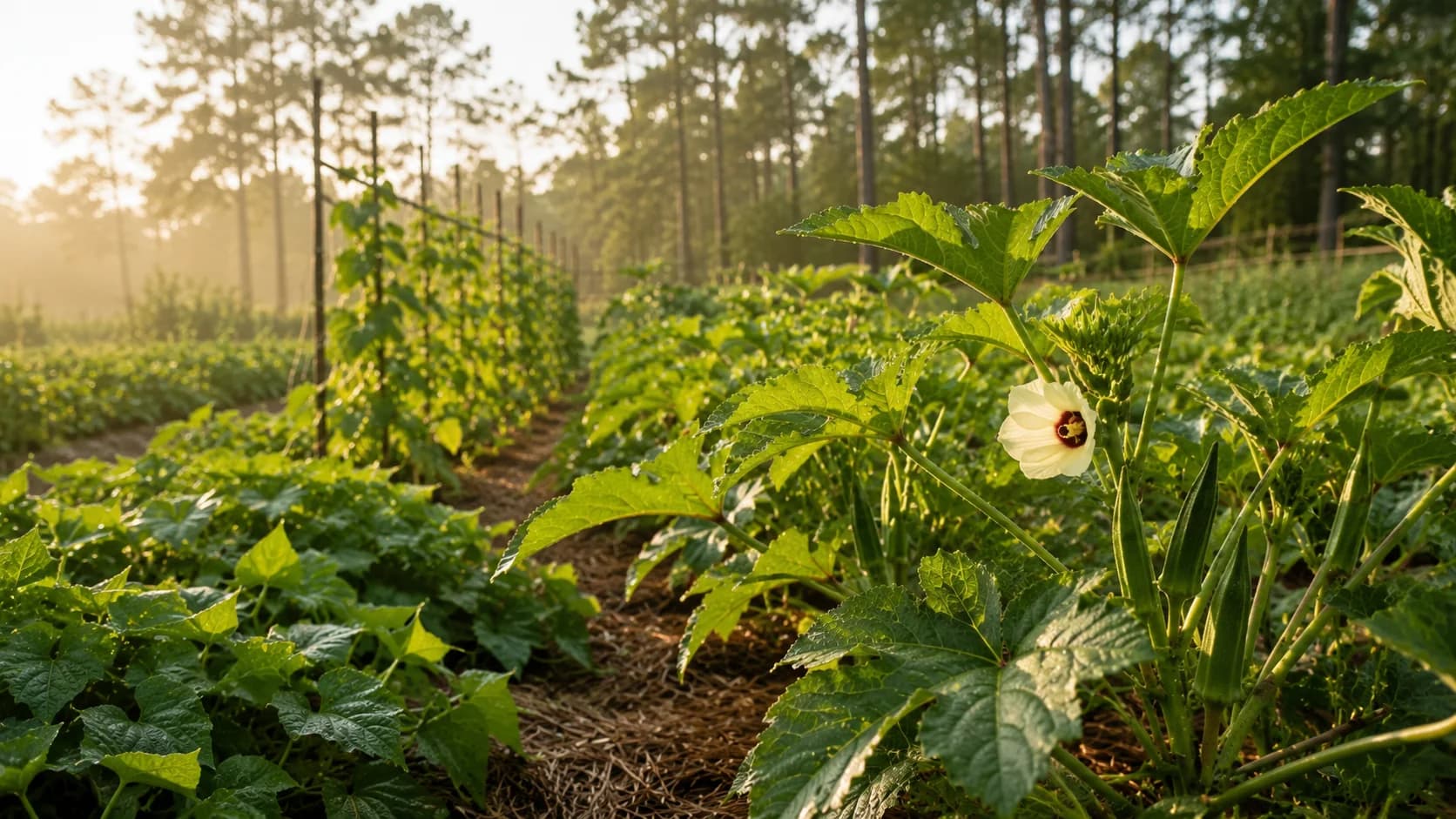
What to Plant in June in the Southeast
June in the Southeast is not for the faint of heart — or the cool-season gardener. Temperatures routinely push into the 90s before the solstice, afternoon thunderstorms roll in without warning, and humidity makes every morning feel like a steam room. But this is also prime time for some of the most iconic Southern crops: okra that shoots up overnight, sweet potatoes quietly bulking underground, Southern peas fixing their own nitrogen while they produce, and watermelons sprawling toward the fence line.
If you're gardening in Georgia (Atlanta, GA is USDA Hardiness Zone 8a), the Carolinas (Charlotte, NC is Zone 8a; Charleston, SC is Zone 9a), Tennessee (Nashville, TN is Zone 7b), or Alabama (Birmingham, AL is Zone 8a), your June planting strategy is more similar than different. The key shift: you're no longer gardening against cold. You're gardening against heat.
The June Rule: Love the Heat or Tolerate It
Anything you plant now needs to either thrive in heat or at least hold steady through it. Cool-season crops — lettuce, spinach, broccoli, peas — are done or bolting right now. Don't fight it. June in the Southeast belongs to warm-season crops that were practically bred for this climate. Many of them originated in tropical or subtropical regions and genuinely perform better when temperatures crest 90°F than when they don't.
The second rule: get things in the ground as early in the month as possible. By late June, temperatures in the deeper zones can stress even heat-lovers during establishment. If you're in Zone 9a (Savannah, GA), aim for the first two weeks of June for any direct sowing. Zone 7b gardeners in the Tennessee Valley have a bit more runway.
Okra: The Queen of the June Garden
Okra deserves its own category. Plant it in June in the Southeast and it will almost certainly succeed. Sow seeds directly in ground that has warmed to at least 65°F — which it certainly has by June in Zones 8 and 9. Plant 1 inch deep, 12–18 inches apart in full sun.
Good varieties for the Southeast include 'Clemson Spineless' (the old reliable — productive, widely available, forgiving), 'Burgundy' (striking red pods, slightly slower but worth it in ornamental beds), and 'Jambalaya' (compact type that works well in raised beds). Start checking pods at 3–4 inches — once okra gets away from you, it turns woody fast and signals the plant to slow production. Check daily during peak season.
Southern Peas: Work Smarter, Not Harder
If you're not growing Southern peas yet, June is your entry point. Black-eyed peas, crowder peas, cream peas — all are Vigna unguiculata, and they're genuinely low-maintenance heat-season crops. Direct sow 1 inch deep, 4–6 inches apart in full sun. They fix their own nitrogen, which means you don't need to fertilize heavily, and they actually do better in leaner soils than in rich amended beds.
Reliable varieties include 'Pinkeye Purple Hull' (a classic, freezes beautifully), 'Mississippi Silver' (crowder type, very heat-tolerant), and 'Zipper Cream' (exceptionally easy to shell, mild flavor). All three are widely grown across the Southeast and well-suited to its summers. Expect your first harvest in about 65–75 days from direct sowing, putting you solidly in late August — perfect timing for a pre-fall canning run.
Sweet Potato Slips: Now or Never
Sweet potato slips can still go in the ground through mid-June in most of the Southeast. They need at least 100–120 frost-free days to mature, and Zones 8 and 9 have plenty remaining. Plant slips 12–15 inches apart in loose, well-drained soil. Sweet potatoes will grow in nearly any soil, but they appreciate good drainage to form round, uniform roots rather than misshapen ones.
'Beauregard' is the most common commercial variety for a reason: reliable, prolific, and familiar to every grocery store shopper. 'Jewel' is a good backup if Beauregard slips are sold out at your local extension office or farm supply. For a dry-fleshed Japanese-style sweet potato, look for 'Murasaki', which is increasingly available through Southern seed suppliers.
Water slips daily for the first week until they establish. After that, sweet potatoes are largely on their own — overwatering actually produces lush vines at the expense of roots.
Heat-Tolerant Herbs
Basil is at its peak right now. Direct sow or transplant 'Genovese' for classic Italian cooking, 'Prospera' if you want genuine disease resistance against downy mildew (a real problem in Southeast humidity), or 'Siam Queen' for Thai and Southeast Asian cooking. Plant in your sunniest spot. Pinch flowers as soon as they appear — the moment basil commits to seed production, leaf quality drops sharply.
Rosemary, thyme, and oregano all overwinter in Zones 8–9 and need almost no attention in June beyond confirming they're not waterlogged from afternoon storms. If you're establishing a new herb garden, June is fine for these. Just plant in a raised bed or mounded row if your native soil drains slowly.
What to Plant Now for Your Fall Garden
This is the piece many Southeast gardeners miss: June isn't just about what you're harvesting in July and August — it's about getting ahead of fall. In Zone 8a, fall broccoli and cauliflower need to go in the ground as transplants in late August to early September. That means starting seeds indoors in mid-to-late June.
Start broccoli seeds in cell trays under grow lights or near a strong south-facing window. 'Green Magic' and 'Gypsy' are both solid choices for the Southeast — they handle the late-summer residual heat reasonably well at transplant time. 'Calabrese' is a good heirloom option if you want to save seed. Keep seedlings moist and thin to one per cell. By the time late August arrives and you're ready to transplant, these seedlings will be at the right size and temperatures will be starting their long, slow retreat.
Same timing applies to collard greens, kale ('Winterbor' and 'Lacinato' both perform well in Southeast fall), and cabbage. Don't skip this step — it's the difference between a productive fall garden and a fall season that just quietly runs out.
Cucumbers: A Second Planting
If your spring cucumbers are still producing, count yourself lucky. But if powdery mildew, cucumber beetles, or sheer exhaustion have taken them down, early June is a good time for a second planting. Cucumbers will produce into September or October in Zones 8–9 before meaningful frost concern arises.
Choose a disease-tolerant variety for summer plantings. 'Marketmore 97' has improved tolerance for powdery mildew compared to the original 'Marketmore 76' and holds up well in heat. 'Diva' is a seedless type that sets fruit without pollination and handles summer stress better than many standard slicers. Give cucumbers a trellis to keep fruit off the ground and improve airflow — critical in June humidity.
Summer squash is trickier for a second June planting because squash vine borers (the larvae of Melittia cucurbitae) are typically at peak emergence in June and July across the Southeast, and fresh plantings attract them reliably. If you want to try, consider varieties with better vine borer tolerance like 'Waltham Butternut', or cover young transplants with row cover until they're well-established.
What Not to Plant in June
Leave the lettuce seeds in the envelope. Same goes for spinach, cilantro, snap peas, and most brassicas planted outdoors (fall starts are different — see above). Sowing these outside in June in the Southeast is money and effort spent on plants that will bolt or fail within days of germination. There's no trick to make it work. Wait until September, when soil temperatures drop and you have real growing days ahead.
Keep Records While It's Fresh
One habit that pays consistent dividends: write down what you planted, when, and how it performed. Southeastern gardens vary enormously by microclimate — a shaded north-facing bed in the mountains of western North Carolina is a completely different world from a south-facing raised bed in Savannah (Zone 9a). The notes you take this June will make next June more efficient and less experimental.
Your Free Planting Calendar
The fastest way to stay on top of what to plant and when — for every month of the year, tailored to your exact location — is the free 12-month planting calendar at greenprint.garden. Enter your zip code and get a custom schedule built around your first and last frost dates and your specific hardiness zone. It's free and takes about 30 seconds to generate.