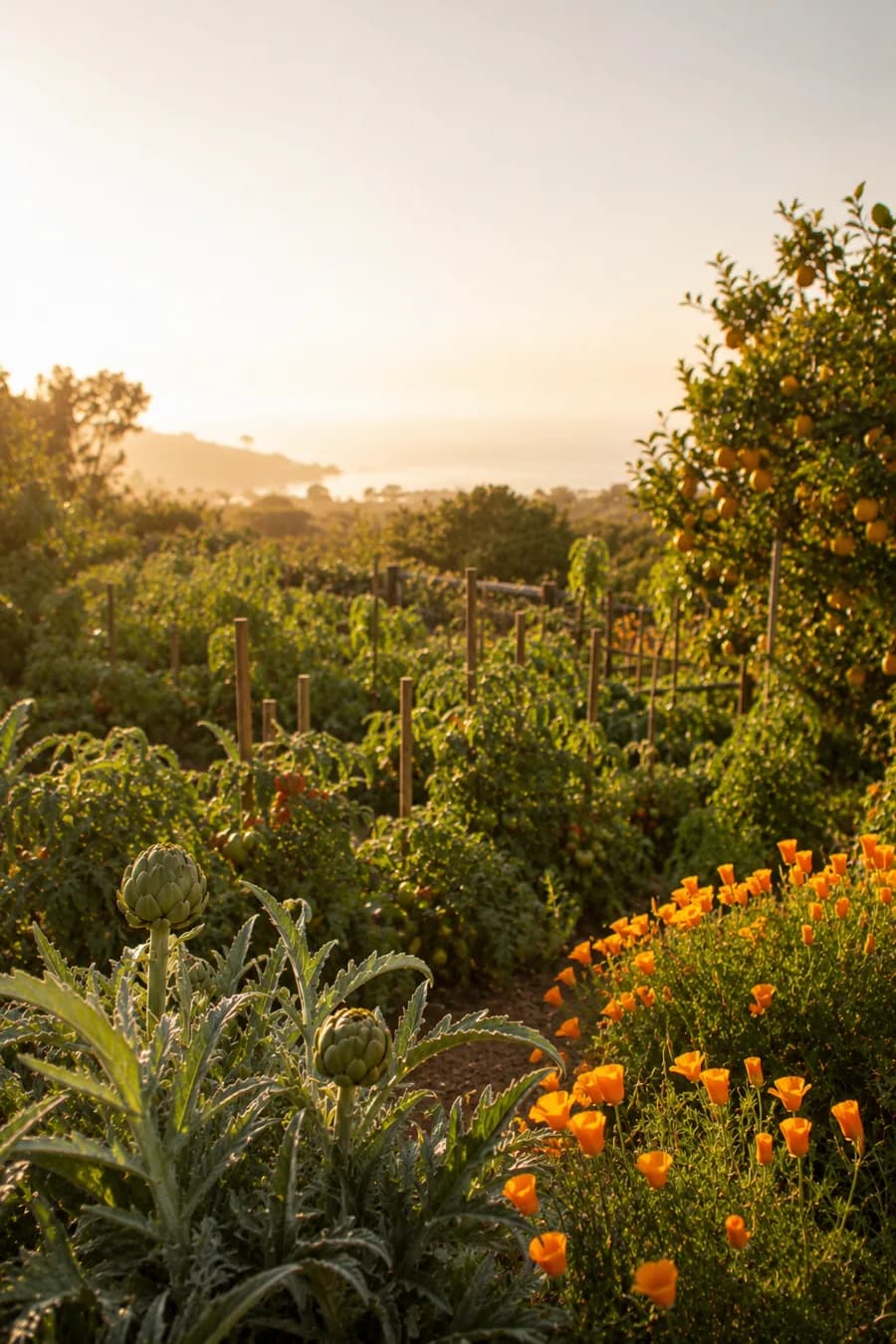
What to Plant in May in California — Coastal, Valley, and Desert Zones
"California" is barely a useful gardening word. The state spans USDA Zones 5b (high Sierra) to 11a (Imperial Valley), with three radically different climates compressed into one map: a fog-cooled coast, a baking Central Valley, and a true desert in the southeast. May in Eureka is mild and damp. May in Sacramento is hot enough to bolt your spring lettuce. May in Palm Springs is already past 100°F most afternoons.
Generic "May in California" planting advice is mostly worthless. Here's what actually works, broken down by where you garden.
Coastal California — San Francisco, Monterey, Mendocino, North Coast
You're in a Mediterranean climate moderated by ocean fog. Cool mornings, mild afternoons, very low summer rainfall. Your warm-season crops will struggle if they're heat-dependent (peppers, melons, basil) and thrive if they're more forgiving (tomatoes, zucchini, beans).
Plant in May:
- Tomatoes — Plant transplants now. Coastal fog means you want determinate or early-ripening varieties: 'Stupice', 'Early Girl', 'San Francisco Fog'. Skip giant beefsteaks unless you're inland enough to get real heat.
- Zucchini, summer squash, cucumbers — Direct-sow once soil hits 60°F (usually mid-May on the coast).
- Beans (bush and pole) — Direct-sow. Foggy mornings won't bother them.
- Lettuce, kale, chard, spinach — Yes, in May. The cool coast lets you keep growing cool-season crops most of the summer.
- Artichokes, leeks, fennel — Mediterranean staples that love this climate.
Skip until inland summer days are over (September):
- Peppers, eggplant, melons, sweet corn — They want heat the coast doesn't reliably deliver. Possible in greenhouse or warmest microclimates.
Watch for:
- Powdery mildew on squash and tomatoes — coastal moisture is the perfect breeding ground. Plant with airflow space, water in the morning at the base only.
Central Valley — Sacramento, Fresno, Bakersfield, Stockton
You're in USDA Zone 9a-9b with summer highs that routinely hit 95-105°F. May is your last comfortable planting window before the long, brutal summer. Get everything heat-loving in the ground by mid-May or you're racing the heat.
Plant in early-to-mid May:
- Tomatoes — Heat-tolerant varieties only: 'Heatmaster', 'Solar Fire', 'Phoenix', 'Florida 91'. Plant deep (bury 2/3 of the stem), mulch heavily, and install drip irrigation now.
- Peppers — Bell and hot. They love Valley heat once established.
- Eggplant — Tropical perennial here. Plant transplants.
- Melons — Watermelon, cantaloupe, honeydew. They want 100+ frost-free days and Valley summers deliver.
- Sweet corn — Direct-sow in blocks for pollination. Successive plantings every 2 weeks for harvest through August.
- Okra, southern peas, sweet potatoes — All love Valley heat.
- Basil, cilantro (heat-tolerant 'Slow Bolt'), oregano — Direct-sow or transplant.
Skip until October:
- Lettuce, spinach, peas, broccoli, cauliflower, cabbage — Will bolt or refuse to head in summer. Fall garden territory.
- Cool-season root crops (carrots, beets, radishes) — Direct-sow possible but quality suffers. Wait for fall.
The most important Valley task in May:
- Set up drip irrigation before it gets hot. Hand-watering in 105°F afternoons doesn't reach the root zone — water evaporates before it sinks. Drip lines on a timer, deep watering 2-3x weekly, mulch 3 inches thick. Do this in May or pay for it in dead plants in July.
Southern California Coast — LA, San Diego, Long Beach
Mild Mediterranean climate, generally Zones 10a-10b. Less extreme than the Central Valley, less foggy than the North Coast. May is excellent for almost anything.
Plant in May:
- All warm-season vegetables — Tomatoes (any variety), peppers, eggplant, beans, squash, melons, cucumbers, okra, sweet potatoes. Get them in.
- Tropical herbs — Basil, Thai basil, lemongrass, holy basil all thrive.
- Citrus trees — Plant now while temperatures are still mild but soil is warming.
- Avocado trees — Same.
- Cool-season crops continue in the mildest coastal pockets — lettuce, kale, chard can run year-round if shaded in summer.
Skip:
- Anything that needs a real winter dormancy (most stone fruits in coastal LA struggle without chill hours).
Desert California — Palm Springs, Coachella Valley, Mojave, Imperial Valley
You're in Zones 10b-11a with summer temperatures regularly above 110°F. Your growing seasons are inverted. May is the end of your spring garden, not the beginning. By June, almost nothing produces in open-air conditions. October through April is your real garden.
Plant in May only if you're behind:
- Sweet potatoes — One of the few crops that genuinely thrive in 110°F days. Plant slips now for an October harvest.
- Okra — Direct-sow. Loves the heat. Productive into October.
- Cowpeas (black-eyed, crowder) — Heat-tolerant, fixes nitrogen.
- Heat-extreme tomatoes — 'Punta Banda', 'Porter', 'Heatmaster'. They'll set fruit in heat that kills standard varieties, but production drops sharply above 100°F nights.
The honest answer for May in the desert:
Use May to prep beds, lay drip irrigation, mulch heavily, and plant a few heat survivors. Then ride out June-September. Start your real fall garden in late August indoors, transplant in October when nights drop below 90°F.
Pruning, not planting:
- Citrus, pomegranate, fig — Prune now if you haven't. They'll appreciate the reduced canopy load going into summer.
Universal May Tasks Across California
- Mulch like your garden depends on it — because it does. 3-4 inches of straw, leaves, or wood chips around every plant. Cuts water needs 30%+ and stabilizes soil temperature in inland areas where 50°F nights and 95°F days are common in May.
- Install drip irrigation if you haven't. California's water restrictions tighten every year. Drip uses 40-60% less water than sprinklers and delivers it where plants actually use it.
- Start fall seeds indoors — Late May is the start of fall-garden seed-starting season in inland zones. Tomatoes, peppers, brassicas for August-September transplant.
- Plant a pollinator strip — California native flowers (California poppy, salvia, yarrow) attract bees and beneficial insects through the dry summer. Plant once, it self-seeds for years.
Knowing Your Zone Is Especially Important Here
California's range from Zone 5b to 11a is the widest of any US state. What works in Eureka (Zone 9a, foggy coast) is wildly different from Eureka's same-zone neighbor across the mountains (Zone 7a, snowy winters). And Palm Springs (Zone 10b) and San Francisco (also nominally Zone 10b) have almost nothing in common growing-wise.
The USDA zone gives you the cold-hardiness ceiling, but California gardeners need to consider summer heat patterns and rainfall too. Enter your zip on GreenPrint.garden and we'll pull your zone, local frost dates, and the plants actually suited to your specific microclimate — not generic state-wide advice.
Free 12-Month Planting Calendar for Your California Zip
Drop your email and zip and we'll send a personalized 12-month planting calendar — what to plant every month for your exact part of California — to your inbox right now. No spam, unsubscribe anytime.
California gardening is rewarding once you stop fighting your climate and start matching plants to it. May is your last comfortable window in most of the state — plant well.