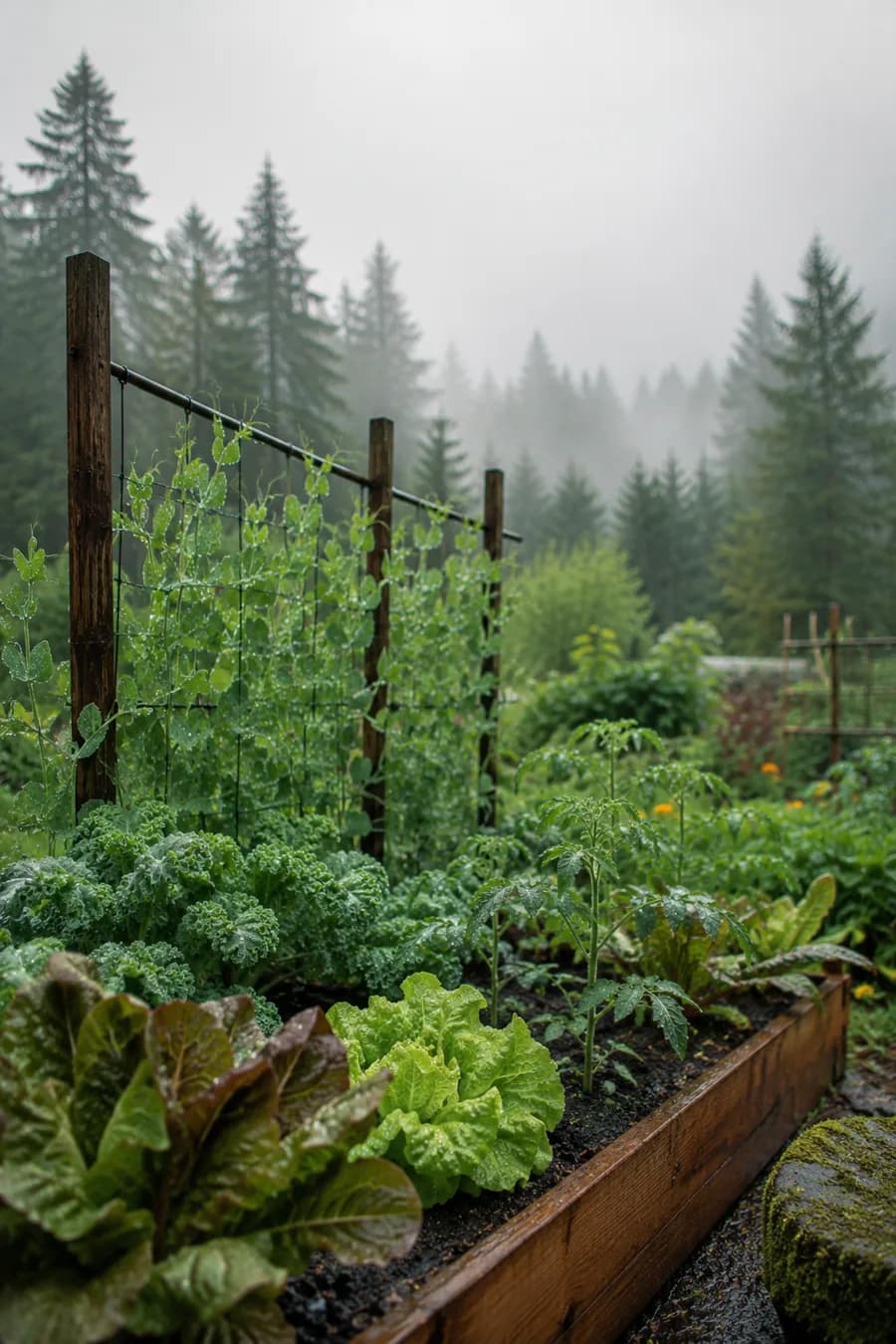
What to Plant in May in the Pacific Northwest
May arrives in the Pacific Northwest with everything gardeners have been waiting for: soil that's finally warm enough for warm-season transplants, long days stretching toward the summer solstice, and that particular quality of light that makes the garden look cooperative. If you're in Seattle, Washington (USDA Hardiness Zone 9a) or Portland, Oregon (USDA Hardiness Zone 9b), your last frost date passed weeks ago. May is less a starting gun than a full sprint.
This guide covers both sides of the Pacific Northwest experience — the mild, maritime west of the Cascades and the colder, drier east. Wherever you're gardening, there's plenty to plant right now.
Understanding the Pacific Northwest Climate in May
The western lowlands — Puget Sound, the Willamette Valley, the coast — share a maritime climate that makes late spring a gardener's sweet spot. Average daytime highs in Seattle run 60–65°F in May, with nights dropping to the upper 40s. Portland typically runs 5–10 degrees warmer.
Soil temperatures in the western lowlands reach 55–60°F by early May and climb toward 65°F by month's end. That matters because cool-season crops have been thriving since March, but warm-season crops like tomatoes and peppers need soil that's genuinely warm — at least 60°F at root depth — before they hit their stride.
East of the Cascades, gardeners in Spokane, Washington (USDA Hardiness Zone 7a) and Bend, Oregon (USDA Hardiness Zone 6b) are running four to six weeks behind the west side. Spokane's last frost averages around May 7, so early May plantings there still carry risk. Wait until the third week of May before setting out warm-season transplants east of the mountains.
One climate factor shapes every PNW tomato decision: late blight. Phytophthora infestans thrives in the cool, moist conditions that Pacific Northwest summers reliably deliver. Choosing blight-resistant varieties isn't a nicety here — it's how you actually harvest tomatoes.
What to Transplant in May (West of the Cascades)
Tomatoes
Tomatoes are what most PNW gardeners want, and the crop that most rewards intentional variety selection. The cool summers mean indeterminate varieties needing 80+ days don't ripen reliably outdoors unless you're in Portland's warmer neighborhoods. Early, blight-resistant, and regionally adapted is the winning combination.
The varieties that consistently perform:
- 'Legend' — Developed at Oregon State University specifically for this region. Determinate, matures around 68 days, and carries strong resistance to late blight. Large, meaty fruit with genuine flavor. The first choice for outdoor growing in the PNW.
- 'Siletz' — Another OSU release. Sets a heavy early crop, more compact habit than Legend. Good choice when you want production before summer ends.
- 'Stupice' — A Czech heirloom with a deep PNW following. Small to medium fruits, indeterminate, remarkable cold tolerance. It ripens in cloudy summers when other varieties stall, though it lacks formal blight resistance.
- 'Willamette' — A Willamette Valley classic, adapted over generations to Oregon's short, cool growing season.
Transplant in mid-May once soil is consistently above 60°F. In Seattle (Zone 9a) and the Puget Sound lowlands, a Wall-O-Water or frost cloth for the first few weeks gives transplants a meaningful boost — not because frost is likely, but because consistent warmth drives early root establishment.
Peppers
Peppers want warmer soil than tomatoes — ideally 65°F or above. In the western lowlands, that typically means late May. Give them the warmest, most sheltered spot in your garden: south-facing raised beds near a wall or fence accumulate the heat that cool nights otherwise steal. Choose shorter-season varieties: 'Early Jalapeño' (65 days) and 'Ace' bell pepper (50 days from transplant) make more sense here than large, late-maturing sweets.
Cucumbers and Summer Squash
Both do well in May once soil clears 60°F. For cucumbers, 'Marketmore 76' is the reliable workhorse — disease-resistant, widely adapted, and consistently productive in PNW conditions. For summer squash, 'Black Beauty' zucchini is the regional standard: prolific, fast, and not fussy about the kind of overcast mornings that would slow other varieties.
Basil
Wait until the second or third week of May. Basil sulks in cool soil and can stall for weeks if set out too early. When overnight lows are consistently above 50°F, it's ready.
What to Direct Sow in May
Beans
Bush beans are May's most satisfying direct sow — they germinate quickly in warming soil and go from seed to harvest in 50–55 days. 'Provider' (50 days) handles cooler soil temperatures better than most beans and has solid disease resistance. 'Blue Lake 274' is the high-yield classic for snap eating and freezing.
Sow 1 inch deep, 3 inches apart. Thin to 6 inches once up. They'll emerge in seven to ten days.
Corn
Corn needs soil at 65°F minimum, so late May in most of western Oregon and Washington. Choose early varieties: 'Bodacious' (75 days) and 'Peaches and Cream' (83 days) both mature before fall rains arrive. Plant in blocks of at least four rows for reliable pollination — a single long row produces poorly.
Peas (succession sow)
If you have peas growing already, sow another round in early May for a late-June harvest. After that, summer heat will cause plants to decline regardless. May is your last window.
Chard and Kale
Both can be direct-sown in May for summer and fall production. 'Red Russian' kale is tender enough to harvest as baby salad greens at 25–30 days, well before full maturity. 'Bright Lights' chard grows fast in the PNW and produces all season without bolting.
Beets and Carrots
Succession sow both throughout May. They perform well in the 55–65°F soil temperatures common in the western lowlands this month and will be ready to harvest by July. Thin carrot seedlings ruthlessly — crowded carrots grow stunted no matter how good the soil.
East of the Cascades: A Different Timeline
If you're gardening in Spokane (Zone 7a), Bend (Zone 6b), or the Yakima Valley, your schedule lags the coast. Early May carries real frost risk, and late cold snaps can push past mid-May at higher elevations.
Use the first two weeks of May for:
- Setting out cold-tolerant transplants (broccoli, cabbage, kale, chard)
- Direct-sowing peas, spinach, lettuce, and root vegetables
- Hardening off warm-season transplants started indoors
Hold tomatoes, peppers, cucumbers, and squash until after May 15–20 in most eastern locations. No amount of optimism substitutes for warm enough soil.
The Late Blight Question
It's worth addressing directly because it shapes PNW tomato growing so fundamentally. Phytophthora infestans spreads by airborne spores and thrives between 50–80°F with high humidity — Pacific Northwest summer in a sentence.
Prevention beats treatment:
- Choose resistant varieties ('Legend', 'Defiant', 'Mountain Magic')
- Water at the base, never overhead
- Ensure airflow by removing the lower 12 inches of foliage as plants establish
- Remove any infected tissue immediately; bag it for the trash, not the compost
- Apply copper-based fungicide preventatively in wet summers
None of this is fail-safe, but it dramatically reduces losses. The PNW gardeners who harvest tomatoes reliably are the ones who treat blight as a given and plan around it.
What Not to Plant in May
Some warm-season crops are better skipped entirely in most PNW locations:
- Sweet potatoes — Need very warm soil and a 90–110 day season. Marginal even in the warmest Willamette Valley locations, nearly impossible in the Puget Sound.
- Melons — Possible with a black plastic mulch and row covers in the Willamette Valley, marginal elsewhere. Expect to work hard for mediocre results unless you have an especially warm microclimate.
- Okra — Technically possible in Portland (Zone 9b) in a very warm, sheltered spot. Practically, your effort is better directed elsewhere.
Making the Most of a PNW May Garden
The Pacific Northwest's compressed, maritime season rewards gardeners who lean into its strengths: extraordinary cool-season production, brassicas that get sweeter after frost, beans and squash that thrive once soil warms, and tomatoes that succeed with the right varieties. The limitations — cool summers, blight pressure, a short warm-season window — are manageable when you plan for them rather than around them.
If you want a month-by-month planting guide calibrated to your exact zip code — including your local last frost date, soil temperature windows, and variety suggestions — GreenPrint generates a free 12-month planting calendar at greenprint.garden. Enter your zip and it returns a schedule that reflects your actual growing conditions, not generic regional advice.