What's Eating My Tomato Plants? 6 Late-Spring Pests to Identify and Stop
Your tomato plants looked perfect last week. This week half the leaves are riddled, the stems have bite marks, or there's a hole in your first ripening fruit and you can't see what's inside. Welcome to late spring — the moment tomato pests wake up and find your garden.
Most pest damage is solvable if you correctly identify what's doing it. The treatments are completely different — what kills hornworms won't touch aphids, and what kills aphids ignores cutworms. So the first job is detective work, not pesticide.
This guide walks through the six pests that account for ~90% of late-spring tomato damage in North America. For each: what they look like, what damage they leave behind, and how to stop them without nuking your beneficial insects.
1. Tomato Hornworm (Manduca quinquemaculata)
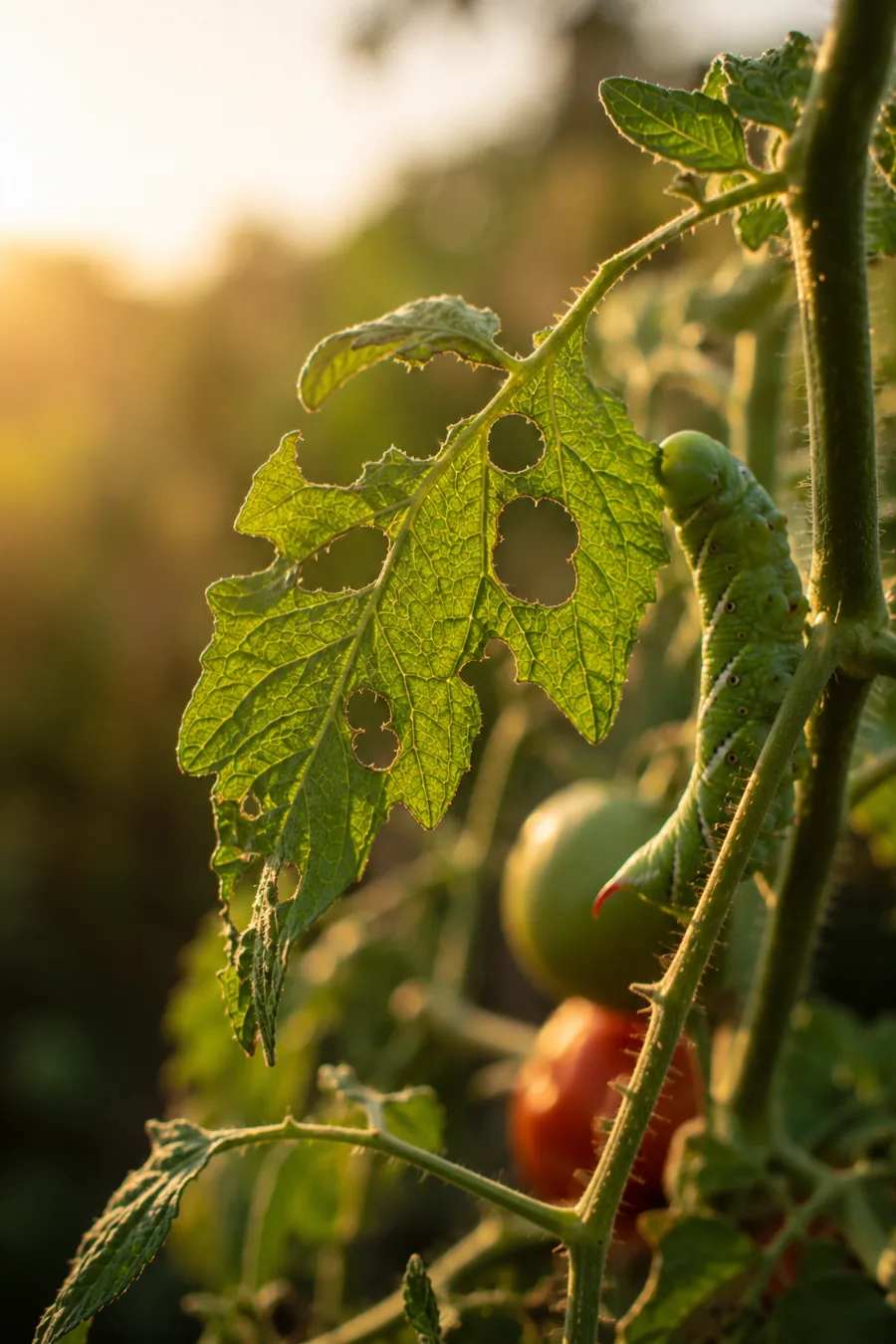
What you see: A 3-4 inch bright green caterpillar with white diagonal stripes and a single curved horn on its rear end. Almost perfectly camouflaged against tomato stems. Often you don't see the caterpillar — you see what's left after it eats.
Damage signature: Whole leaves missing overnight. Bare stems where leaves used to be. Sometimes droppings ("frass") that look like small dark pellets on lower leaves. By the time you notice damage, the hornworm is usually huge.
How to stop them:
- Handpick — gross but effective. They don't bite, just pluck them off and drop them in soapy water. Best done at dusk when they're feeding.
- Bt (Bacillus thuringiensis) — organic-approved bacterial spray, harmless to humans and beneficial insects. Spray the foliage; the caterpillars eat it and stop feeding within hours.
- Wasps as natural enemies — if you spot a hornworm covered in small white cocoons, leave it alone. Those are braconid wasp larvae feeding on the hornworm. Each emerging wasp will hunt more hornworms. Free pest control.
Prevention: Rotate tomato beds yearly (hornworm pupae overwinter in soil). Encourage parasitic wasps with flowering herbs like dill, fennel, and cilantro nearby.
2. Aphids (Various species, usually green or black)
What you see: Tiny (pinhead-sized) soft-bodied insects clustered on new growth, undersides of leaves, and flower buds. They reproduce so fast you'll see hundreds where there were dozens a day ago.
Damage signature: Curled, distorted new leaves. Sticky residue on leaves below (honeydew — aphid excrement). Sometimes black "sooty mold" growing on the honeydew. Stunted plants.
How to stop them:
- Strong jet of water — physically blasts them off. Repeat every 2-3 days until populations crash. Works because aphids can't climb back up the plant easily.
- Insecticidal soap or neem oil — spray all leaf surfaces, especially undersides. Reapply weekly.
- Ladybugs and lacewings — buy them at a garden center or attract them with flowering plants. Each ladybug eats 50+ aphids per day.
Prevention: Avoid over-fertilizing with nitrogen (lush green growth attracts aphids). Plant marigolds, nasturtiums, and dill near tomatoes — they attract aphid predators.
3. Cutworms (Various moth larvae)
What you see: Mostly nothing — they hide in soil during the day. But find soil around damaged plants disturbed, or dig down an inch and you'll find a fat gray-brown caterpillar curled in a C-shape.
Damage signature: Young transplants cut clean off at soil level overnight. The plant is lying on its side like a tiny felled tree. Larger plants get bites in the stems near the soil. The "cut" damage is the giveaway — hornworms eat leaves, cutworms cut stems.
How to stop them:
- Cardboard or aluminum foil collars — wrap a 2-inch tall ring around each transplant stem, push it half-inch into soil. Cutworms can't get past the collar.
- Diatomaceous earth — sprinkle around stem base. Cuts soft caterpillar bodies.
- Bt for soil-dwelling caterpillars — same Bt as for hornworms, drenched into soil.
Prevention: Cultivate soil 2-3 weeks before planting to expose overwintering cutworms to birds. Keep beds weed-free (cutworms hide in weeds).
4. Flea Beetles (Epitrix and Phyllotreta species)
What you see: Tiny (1/16 inch) shiny black or bronze beetles that jump like fleas when you approach. By the time you focus on one, it's gone.
Damage signature: "Shotgun pattern" — dozens of tiny round holes in leaves, especially on young plants. Mature plants tolerate the damage; seedlings can be killed outright.
How to stop them:
- Floating row cover — physical barrier over young plants until they're established. Remove when plants flower (so bees can reach them).
- Sticky traps — yellow sticky cards near plants catch leaping beetles.
- Kaolin clay spray — coats leaves in a fine clay film that flea beetles hate landing on.
- Healthy soil — flea beetles target stressed plants. Good drainage and consistent moisture make plants less appealing.
Prevention: Delay tomato transplanting until plants are 8+ weeks old and woody enough to resist damage.
5. Tomato Fruitworm / Corn Earworm (Helicoverpa zea)
What you see: Green, brown, or pinkish caterpillar (1-2 inches) on or inside developing tomato fruit. Same species attacks corn ears (hence the alternate name).
Damage signature: Holes in green or ripening tomatoes, often near the stem. Brown rot around the hole. Sometimes you pick a tomato and find the caterpillar inside.
How to stop them:
- Handpick affected fruit — remove and dispose (don't compost — eggs survive).
- Bt spray before fruit set — kills caterpillars before they tunnel in.
- Predatory wasps and lacewings — same beneficial insects help here as with hornworms.
Prevention: Don't plant tomatoes next to corn (shared pest). Till beds in fall to expose pupae to winter cold and birds.
6. Spider Mites (Tetranychidae)
What you see: Almost nothing with the naked eye — they're smaller than 1mm. Look for fine webbing on undersides of leaves and tiny moving dots when you shake a leaf over white paper.
Damage signature: Leaves develop a stippled, pale yellow speckling that progresses to bronzing and leaf drop. Damage starts on undersides of lower leaves, then spreads up. Worst in hot, dry conditions — spider mites explode when it's 90°F+ and dry.
How to stop them:
- Strong water sprays to undersides of leaves, daily for a week. Spider mites hate moisture.
- Neem oil — coats and suffocates them.
- Increase humidity — overhead misting in evenings (counterintuitive in arid climates, but spider mites can't reproduce in humid conditions).
- Predatory mites — yes, there are good mites that eat bad mites. Available from organic suppliers.
Prevention: Don't let plants get heat-stressed. Mulch heavily, water consistently. Spider mites are an indicator of plant stress more than a primary cause.
What If It's Not on This List?
A few other late-spring tomato issues that look like pest damage but aren't:
- Blossom-end rot — black sunken spots on the bottom of fruit. Not a pest. It's a calcium uptake problem caused by inconsistent watering. Mulch and water deeply.
- Yellow lower leaves — usually nitrogen deficiency or natural maturation. Not a pest.
- Sudden wilting on hot days — often just heat stress. If leaves recover overnight, it's not disease. If they don't, check for vascular wilt (fungal) at the base.
- White spots on fruit — sunscald from too much direct afternoon sun. Provide light shade.
The Bigger Picture: Pest Pressure Reflects Garden Health
Most of these pests target stressed plants. Healthy tomatoes — well-watered, well-mulched, with diverse plantings around them — resist far better than stressed ones. The same garden with weekly fish emulsion, deep mulch, and herbs alongside tomatoes will see 50-70% less pest damage than one without.
You can spray your way out of an infestation, but the easier path is building soil health and plant diversity so most problems never start.
Want a Free 12-Month Planting Calendar?
GreenPrint's free calendar tells you what to plant when — but also what pests to watch for in your specific zone each month. Drop your email and zip and we'll send a personalized calendar to your inbox right now. No spam, unsubscribe anytime.
If you've identified the culprit on your tomatoes, you're halfway to fixing it. Treat fast, treat targeted, and the plants almost always bounce back.