Why Your Tomatoes Stop Setting Fruit in Summer Heat — And What to Do
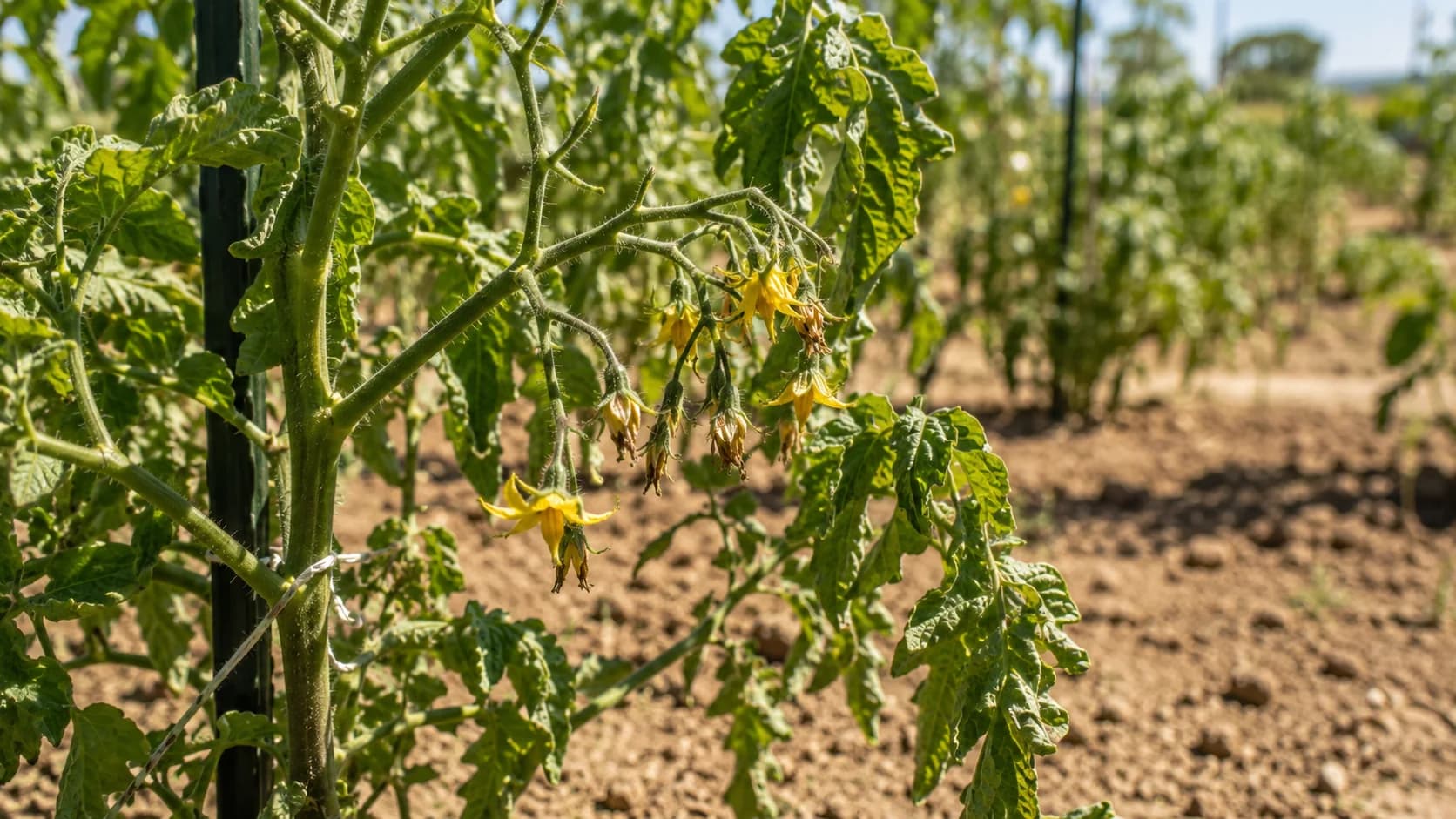
Your tomato plants look healthy. The foliage is green and full, there are plenty of flowers, and you haven't spotted any obvious pests or diseases. But the flowers open, stay for a day or two, and drop off without ever turning into fruit. Meanwhile, the temperature has been hitting the upper 80s and 90s for the past two weeks.
This isn't a disease, a nutrient deficiency, or a pollination problem. It's blossom drop from heat stress — one of the most common frustrations in summer tomato growing, especially across the Southeast, Texas, the Mid-Atlantic, and anywhere that sees sustained warm summers. Understanding why it happens makes the solutions clearer.
Why Tomato Pollen Fails in the Heat
Tomato pollen becomes non-viable above roughly 85–90°F. At sustained daytime temperatures above 90°F, pollen grains either don't release properly from the anthers or lose the ability to fertilize the egg cell. Nighttime temperatures matter equally and often get less attention: when nights stay above 70°F, the plant doesn't recover from daytime heat stress between cycles, and the hormonal signals that trigger and sustain fruit set get disrupted.
The flowers still form and open. The plant looks perfectly fine. But without viable pollen and the right temperature conditions, fertilization doesn't happen — and the plant drops the unfertilized flower to conserve resources.
This process is fully reversible. When temperatures drop back into the optimal range — daytime 70–85°F, nighttime 55–70°F — fruit set resumes. In most regions, that means a second flush in late August or September that's sometimes the best harvest of the year. The plants are not dying; they're waiting.
The Actual Temperature Thresholds
The temperature guidelines for tomato blossom drop show up frequently in gardening advice, but understanding what each threshold means in practice helps you respond appropriately:
- Daytime high above 90°F: Pollen viability drops significantly. Plants may set minimal or no fruit.
- Daytime high above 95°F: Fruit set typically stops entirely. Flowers drop within 24–48 hours of opening.
- Nighttime low above 70°F: Even if daytime temperatures are acceptable, sustained warm nights suppress fruit set. A 95°F day followed by a 65°F night is better for setting fruit than a 90°F day followed by a 75°F night.
- Daytime high of 85–90°F with nights of 65–70°F: This is the difficult middle zone — some varieties handle it, others won't set consistently. This range is exactly where variety selection makes a real difference.
Varieties That Set Fruit in the Heat
The single most effective long-term intervention is choosing heat-tolerant varieties at planting time. These have been specifically bred for pollen viability at elevated temperatures — their anthers release normally in conditions that cause other varieties to fail.
Proven heat-tolerant tomatoes:
- 'Heatmaster' — Developed by the University of Florida, this is the gold standard for hot-climate growing. Medium-large fruits (10–12 oz), good flavor for the category, sets well even when nights stay warm. It's widely grown in Austin, TX (USDA Hardiness Zone 8b), Gainesville, FL (Zone 9a), and similar climates where summer heat is relentless.
- 'Solar Fire' — Similar profile to Heatmaster, with excellent production through Zones 8–10. Slightly later in the season than Heatmaster, higher yield.
- 'Heat Wave II' — Determinate, earlier than the above two, and widely available through major seed retailers. Sets fruit at temperatures that cause most other varieties to quit entirely.
- 'Celebrity' — Not specifically marketed as heat-tolerant, but it's one of the most widely grown varieties across the South for good reason: a vigorous root system and stocky plant that handles heat stress better than many mid-season slicers.
- 'Sun Gold' (cherry tomato) — Cherry tomatoes universally handle heat better than large-fruited types. 'Sun Gold' sets fruit even in conditions that shut down beefsteak and slicer varieties. If your slicers have stopped producing in a July heat wave, your cherry plants probably haven't. This is consistently the variety that keeps producing through difficult summers.
Varieties that struggle in heat:
Large-fruited heirlooms — 'Cherokee Purple', 'German Johnson', most full-size 'Brandywine' strains — set fruit poorly above 85°F. They're worth growing for their exceptional flavor, but in hot-summer climates (Zone 7b and warmer), manage your expectations. Their best production window is before sustained summer heat arrives and again in the fall flush when temperatures moderate.
Four Things That Actually Help
You can't change the ambient temperature, but you can influence the microclimate around your plants and give them the best conditions for managing heat.
1. Shade cloth in the afternoon
A 30–40% shade cloth installed on the west side of tomato plants — or over the entire bed between 1–5 PM — can drop the effective temperature around plants by 5–10°F. That margin is often enough to push some days back inside the viable pollen range. Afternoon sun is the harshest driver of daytime high temperatures in the root zone and around flowers.
Shade cloth clips to a simple wire or conduit frame and doesn't need to be permanent. Remove it once temperatures moderate in late August or September. Some gardeners find that afternoon shade combined with good airflow is the most effective single physical intervention for blossom drop in summer.
2. Deep, consistent watering
Heat stress compounds with moisture stress. A plant that's losing water through its leaves faster than the roots can resupply it will drop flowers more readily than a well-hydrated plant at the same air temperature. In sustained heat, established in-ground tomato plants need approximately 1–1.5 inches of water per week (more on sandy soil or in containers). Deliver it at the root zone with a drip line or soaker hose, not overhead.
Water deeply and infrequently rather than shallowly and daily. Deep watering pushes roots down, where soil stays noticeably cooler than the surface. A plant with deep roots weathers a heat wave better than one with shallow roots from daily light irrigation.
3. Heavy mulch
Three to four inches of straw or wood chip mulch over the root zone keeps soil temperature 10–15°F cooler than bare soil. This matters: root function changes significantly between 80°F and 95°F soil. Cooler soil also retains moisture longer, reducing the frequency of irrigation needed during heat events.
If your tomatoes aren't mulched, fix that this week. It's one of the highest-return tasks in summer tomato growing and costs almost nothing.
4. Ease off nitrogen fertilizer during heat events
When plants are under heat stress and not setting fruit, they're in a kind of survival holding pattern. High-nitrogen fertilizer during this period pushes vegetative growth — more leaves, more plant mass — but doesn't improve fruit set. In some cases it makes things worse, producing rank, floppy growth that competes for water and increases the plant's overall heat load.
Back off any high-nitrogen fertilizer during prolonged heat waves. Maintain consistent potassium and phosphorus (both support root function and are involved in fruit development), but don't push nitrogen until temperatures moderate.
What Not to Do
A few common responses to blossom drop make things worse rather than better:
Don't spray flowers with blossom-set hormones. Products marketed as "tomato blossom set" contain synthetic auxins that can force some parthenocarpic (seedless) fruit development without pollination. The resulting fruits are often hollow, misshapen, and of poor quality. More importantly, these products don't address the underlying heat issue, and they can interfere with the natural fruit development that resumes when temperatures moderate.
Don't pull the plants. The understandable impulse when plants aren't producing is to remove them and replant. An established tomato plant has a large, deep root system and significant stored energy. A heat-stressed plant in late July will typically resume productive fruiting in late August — sometimes its best production of the year. A new transplant put in during a heat wave starts from zero, has no established root system, and is entering the same conditions that are stressing your existing plants.
Don't assume soil or nutrition is the problem. Blossom drop during a heat wave is almost always a temperature problem, not a soil chemistry or fertilizer issue. If you're adjusting pH, buying micronutrient supplements, or treating for calcium deficiency in response to flowers dropping in 95°F heat, you're solving the wrong thing.
The Late-Summer Reward
Here's what experienced tomato growers know from seasons of observation: the late-summer flush — late August through October in most of the country — often produces the best quality fruit of the year. After building a large, healthy root system through the summer, and with temperatures dropping back into the optimal range, fruit set resumes rapidly and plants pour energy into ripening rather than survival.
Fruits that set in September often have better flavor than summer ones because they ripen more slowly in moderating temperatures. The patient gardener who keeps plants healthy through July and August — continuing to water, mulch, and monitor for pests — gets rewarded in fall.
Building a Heat-Smart Tomato Plan
If you garden in a zone where summer heat regularly shuts down fruit set — Zone 7b and warmer, the Southeast, most of Texas, the Desert Southwest — the best long-term strategy combines three things: choose heat-tolerant varieties at planting time, plan for a mid-July through mid-August slow period, and expect a fall flush that's often the most rewarding part of the tomato season.
For a planting calendar built around your specific zip code — including the optimal transplant window for tomatoes, your local heat peak dates, and the fall cool-down timing that determines when your late-season flush will arrive — get your free calendar at GreenPrint.garden. Enter your zip and we'll send a month-by-month planting guide tailored to your actual climate, not generic national averages.
Your tomatoes will fruit again. Keep them alive until fall.